
What is axial length?
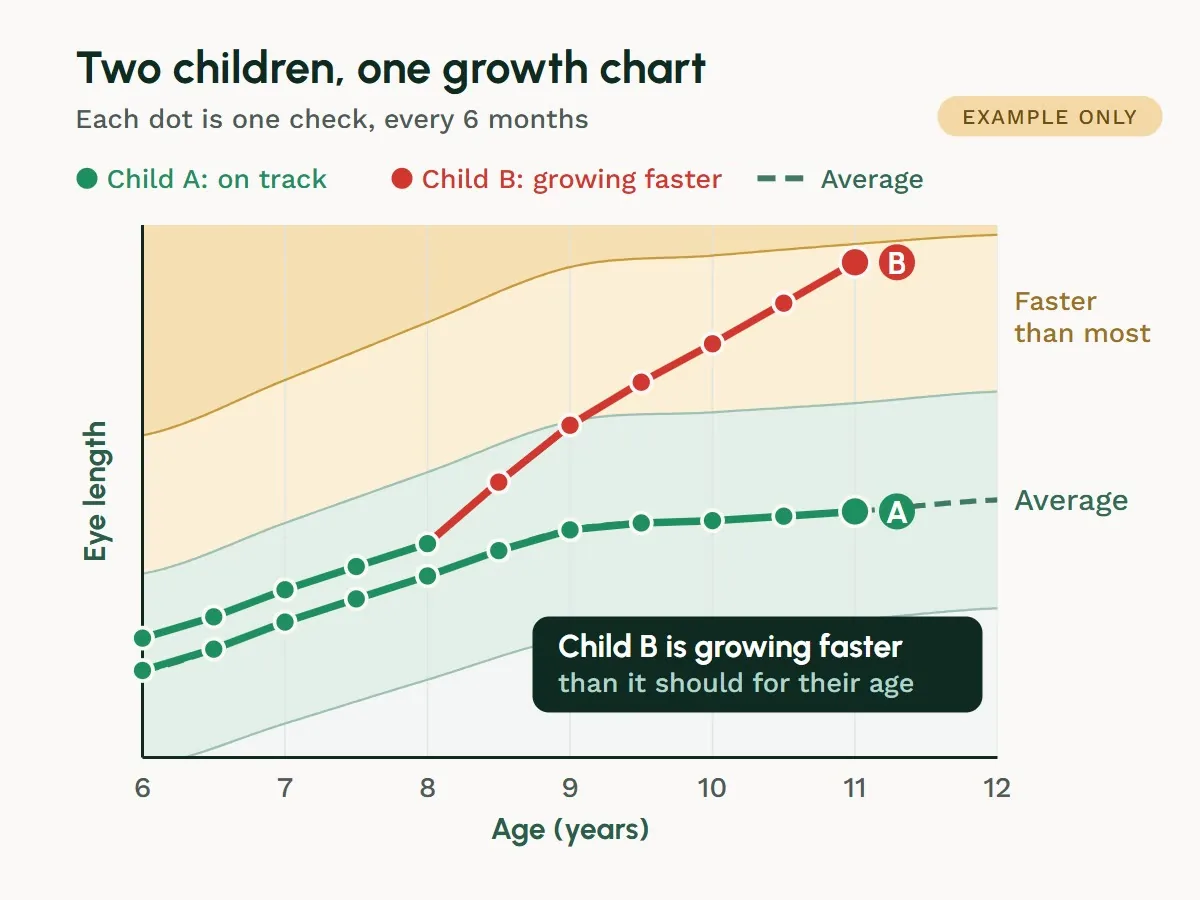
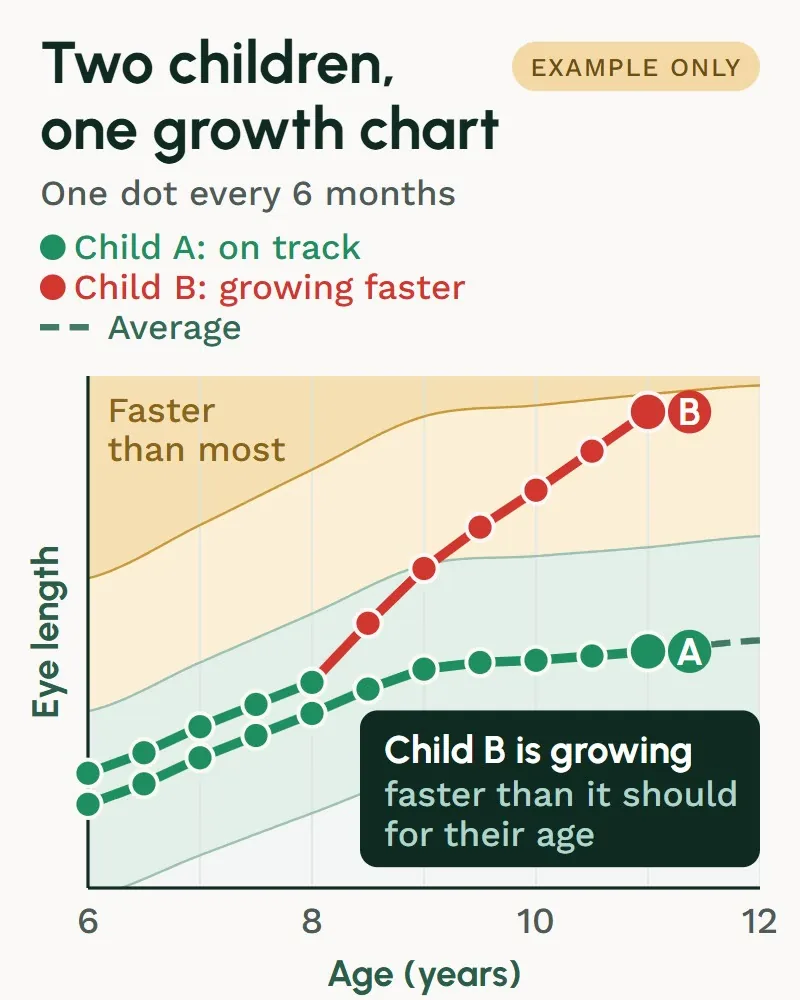
Why we treat it like a growth chart for your child

Dr Mark Joung, Optometrist
Short answer
Axial length is the eye's length from front to back. Over time, it shows when growth is too fast.1
What it is
How long is an eye?
The distance from the front of the eye to the back, in millimetres.
Front to back
Cornea to retina
One straight line from the clear front window to the light-sensing layer at the back.
23.7 mm
A grown eye, on average
In the same Dutch research, eyes averaged 23.4 mm at 15 and 23.7 mm in adults.3
In short-sightedness (myopia) the eye has grown too long for its focusing power, so distant things blur.2 A small change in length is a big change in vision.
Two measurements
Why isn't the glasses prescription enough?
A prescription can shift from day to day. Eye length changes mainly with real growth.2
What it measures
Glasses prescription
How blurry vision is today, in dioptres
Axial length
The physical length of the eye, in mm
Changes with
Glasses prescription
Tiredness, focusing, pupil size, test conditions
Axial length
Mainly real growth
Best for
Glasses prescription
Prescribing lenses today
Axial length
Tracking growth over time
Picks up change
Glasses prescription
After vision has already shifted
Axial length
Often earlier, before the prescription moves
The International Myopia Institute recommends axial length as a key measure for monitoring myopia management.1
How fast
How fast should a child's eye grow?
Slowly. In primary school, about a fifth of a millimetre a year is normal.3
Nearly 7,000 Dutch children, measured at 6 and again at 9
0.34 mm a year
Eyes that became short-sighted grew almost twice as fast.
Children who stayed normally sighted grew 0.19 mm a year. Growth slows sharply in the teens.
Tideman et al. 2018, Acta Ophthalmologica3
Our experience
When does eye length concern us?
In the practice
"Once a child's axial length approaches 24 mm (around 24.1 mm in boys and 23.7 mm in girls), we start monitoring more closely and discussing treatment, whatever the prescription says."
Later in life
Why does a longer eye matter later?
A longer eye stretches the retina, so lifetime risk of some eye conditions goes up.4
The risk of retinal detachment, glaucoma and myopic maculopathy rises with length, and climbs steeply once the eye is longer than 26 mm.4 This is lifetime risk across a population, not a prediction for one child.
Axial length cannot be reversed. Myopia control aims to slow further growth while the eye is still growing, which is why we act in childhood when a child's eyes keep getting worse.
Slowing it
Can anything slow axial length progression?
Yes. Several treatments slowed axial length progression in clinical trials. None stops it, and results vary.
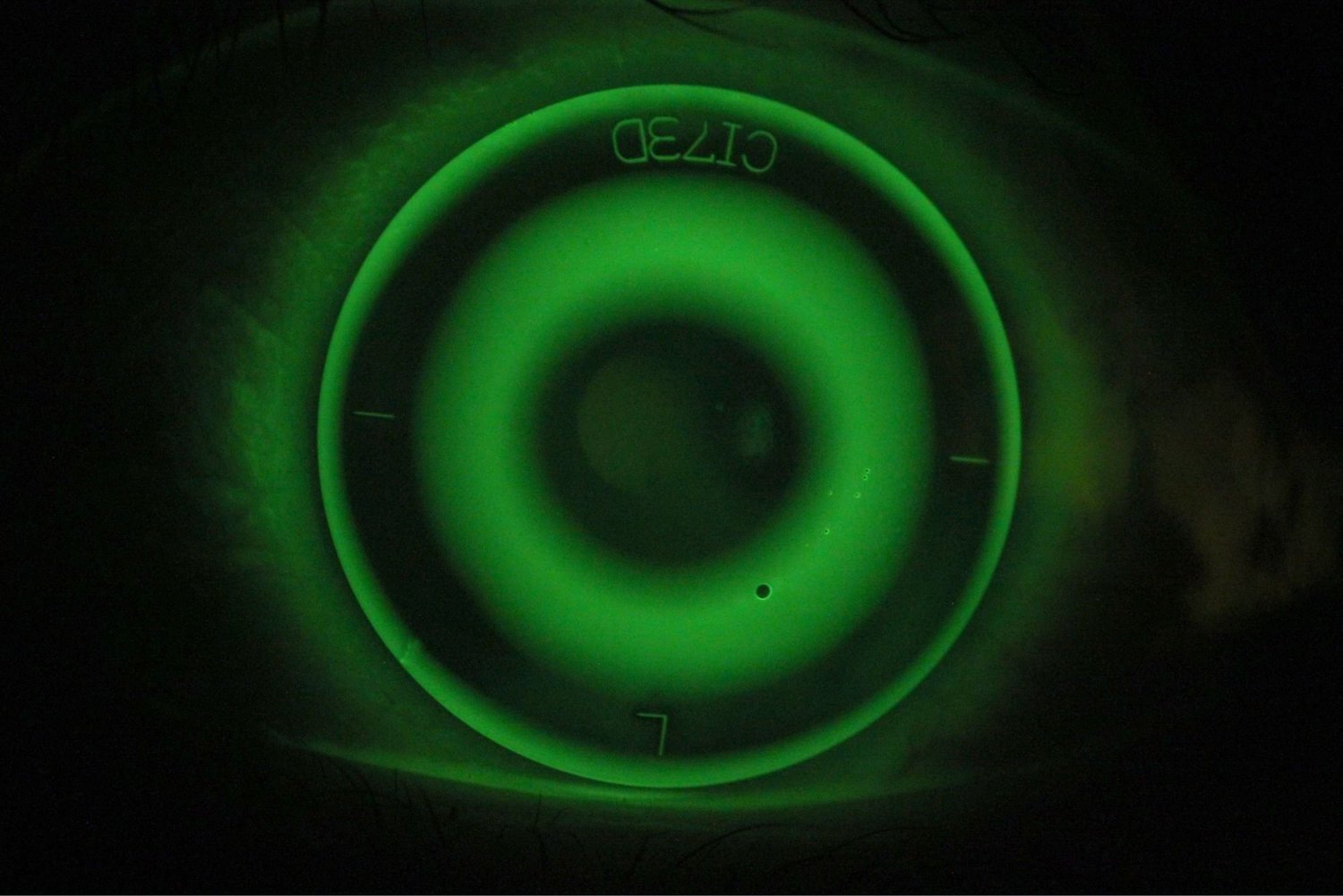
Ortho-K
Lenses worn overnight. No glasses or contacts by day.
ROMIO trial, 20126
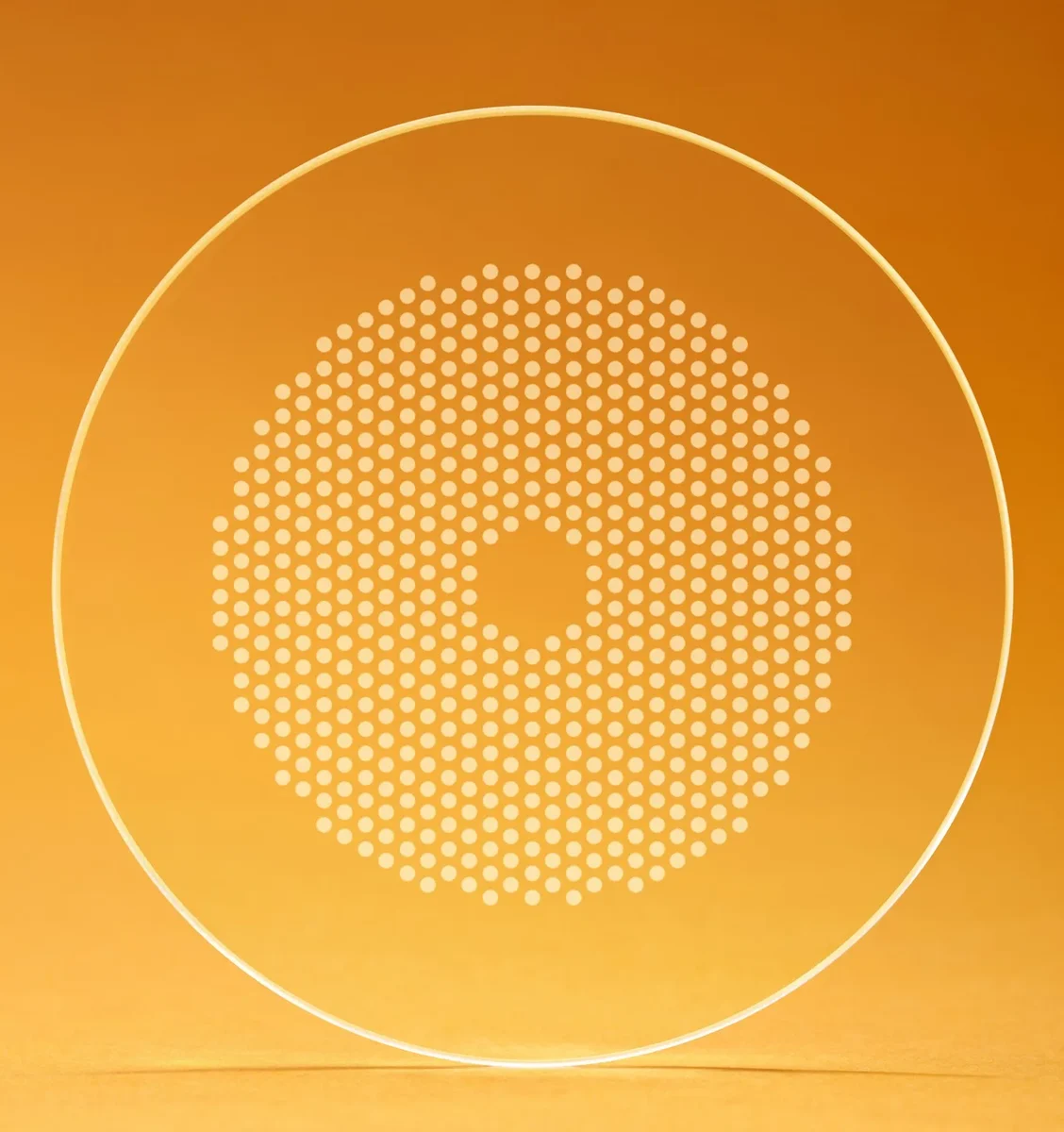
MiyoSmart iQ glasses
Daytime spectacle lenses with a treatment zone, worn 12+ hours a day.
Lam et al. 20207

MiSight 1 day contacts
Daily disposable soft lenses for children.
Chamberlain et al. 20198
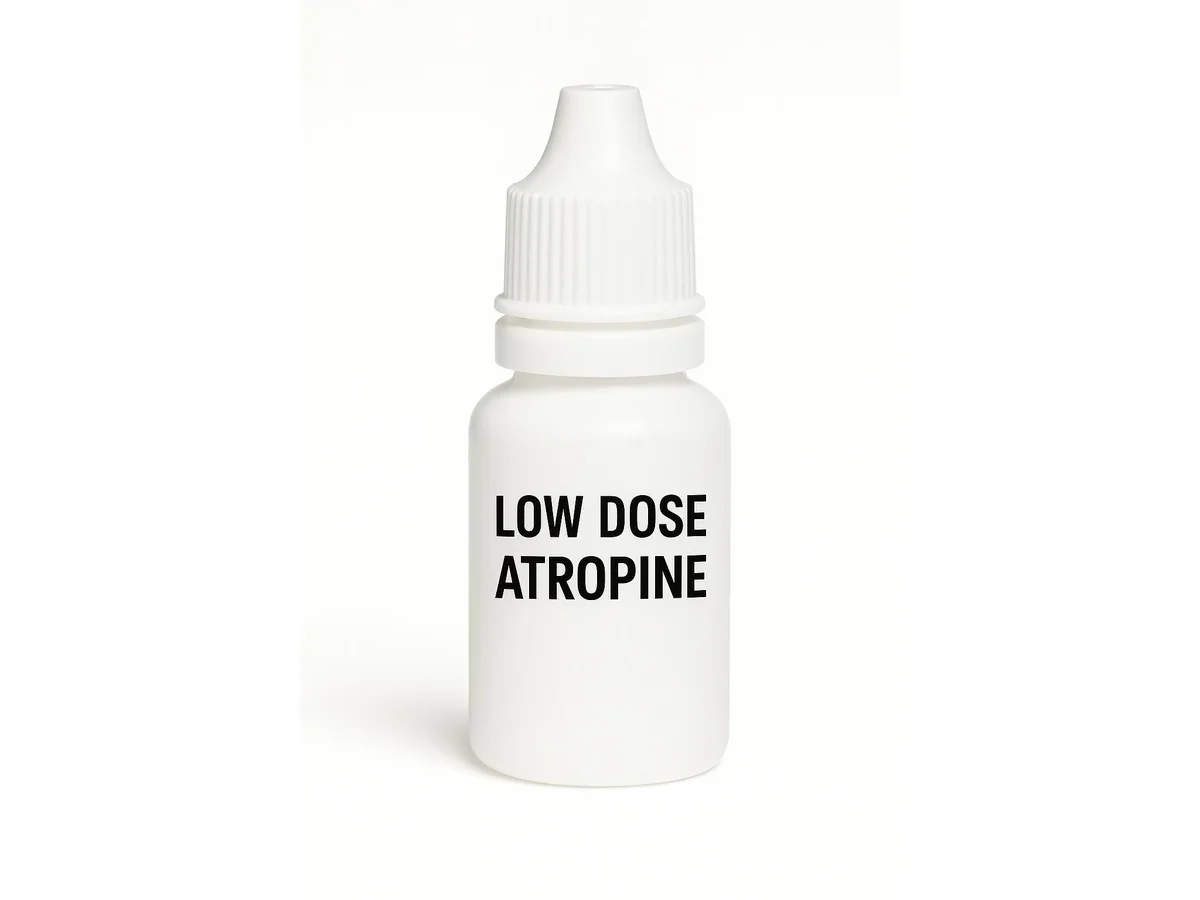
Atropine eye drops
Prescription-only, discussed at the assessment when suitable.
LAMP study, 20199
The growth chart shows whether the chosen treatment is working. If the line keeps climbing, we step up treatment early. The Myopia Clinic explains each option.
The scan
How do we measure it?
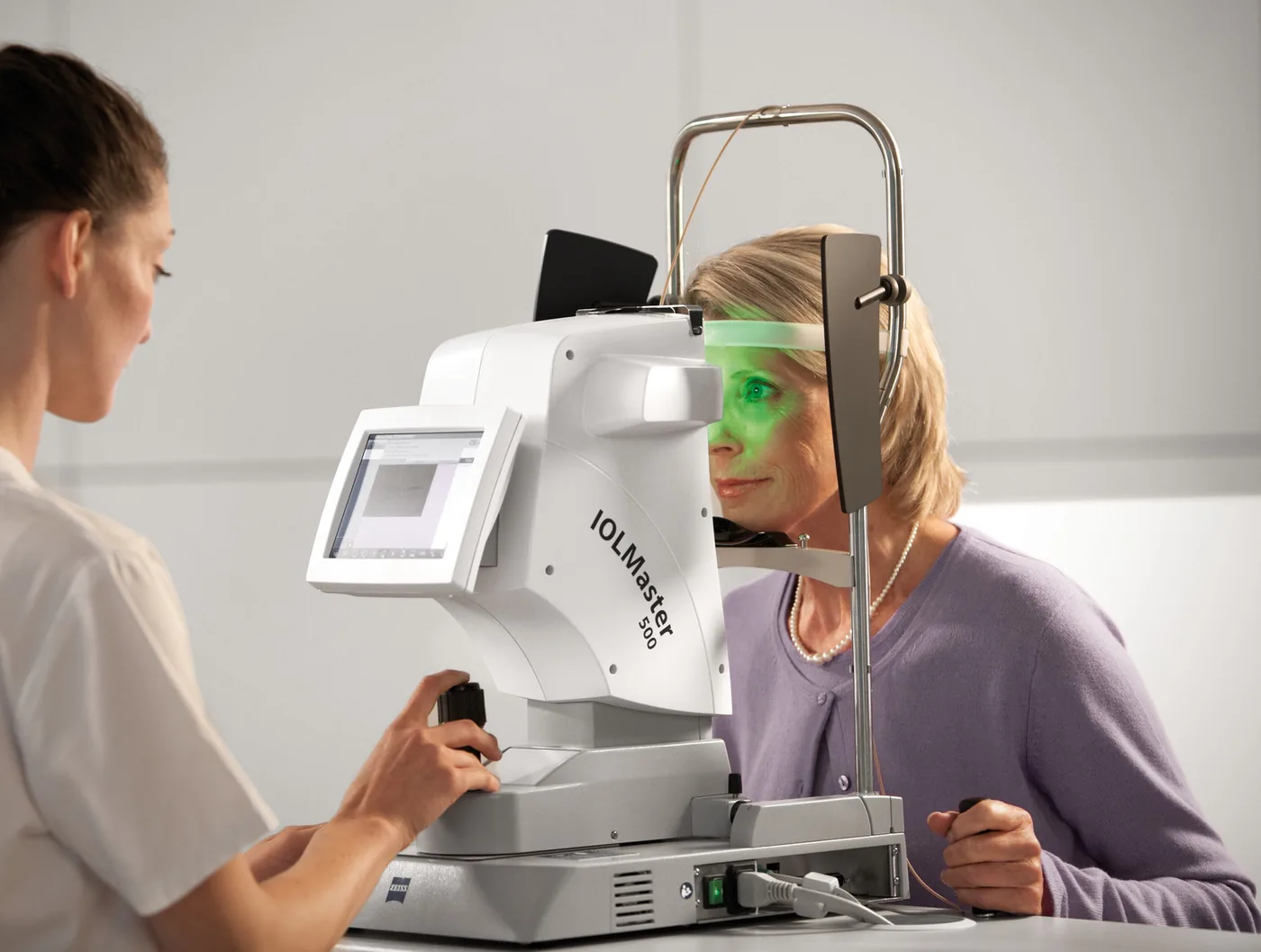
A quick non-contact scan on the ZEISS IOLMaster 500. Nothing touches the eye.10
30 sper eye
No dropsno dilation needed
0.01 mmsmallest reading step
We measure axial length at myopia reviews, usually every six months during active management. Most children find it easy.
In short
What to take away
Length shows growth before the glasses change
The eye can keep growing while the prescription looks steady.2
Every six months, on your child's own chart
Each dot is compared with children of the same age and sex.5
Growth can be slowed, never reversed
So the earlier a fast-growing eye is seen, the more there is to protect.
Questions
Questions parents ask
Is measuring axial length painful, or does it need drops?
No. It is a quick non-contact scan: nothing touches the eye and no dilating drops are needed. Most children find it easy.
My child's prescription didn't change. Why measure axial length too?
The eye can keep growing before the prescription visibly shifts. Axial length often catches that growth earlier.
Does adult axial length change?
For most adults it is stable. The main concern is childhood and the teenage years, while the eye is still growing.
Can axial length be reversed?
No. The aim is to slow further growth, not reverse it.
Related reading
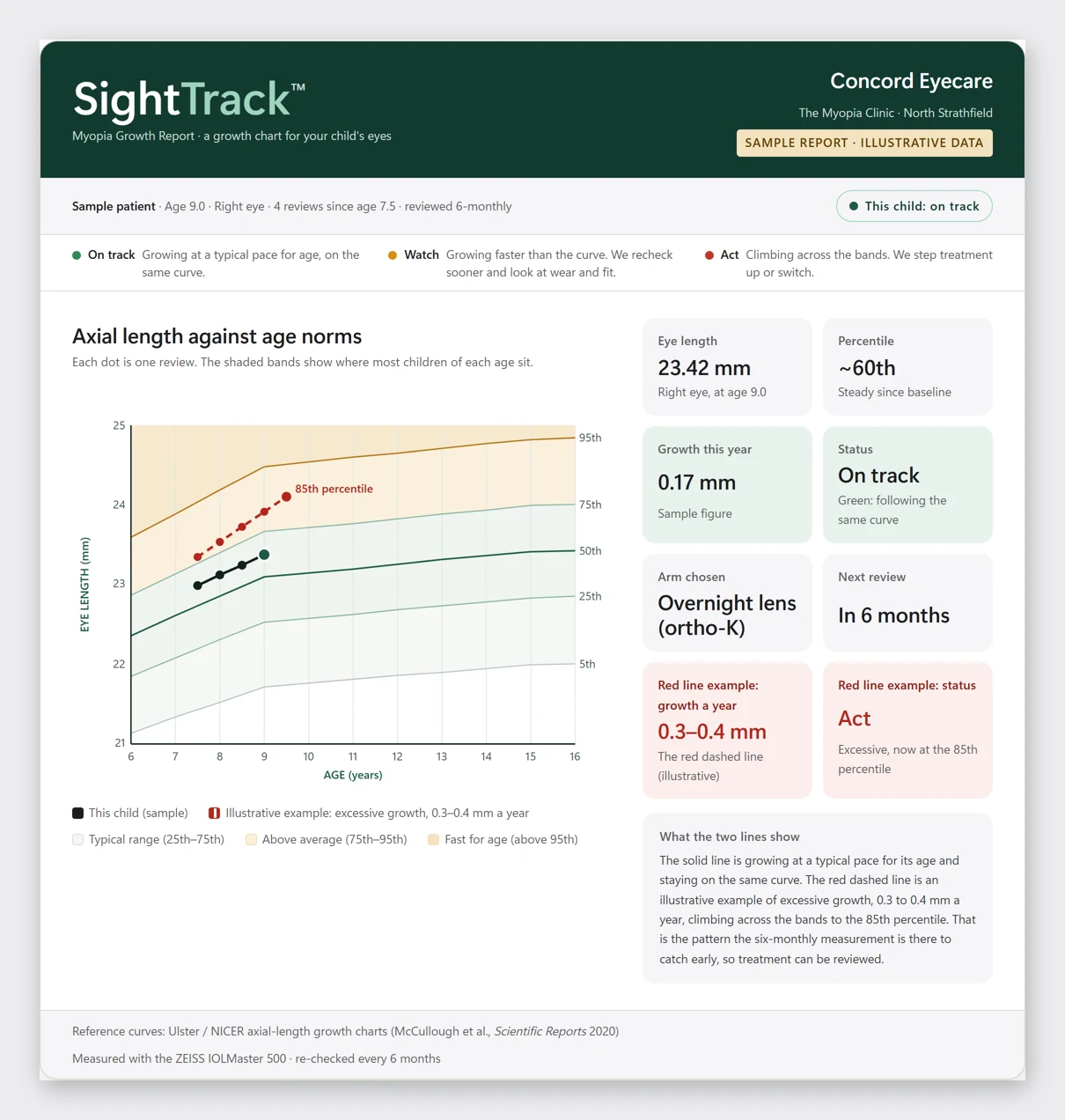
Axial length measurement
What the scan involves and what the report shows.

Children's Myopia Assessment
A full hour, with axial length measured and plotted.
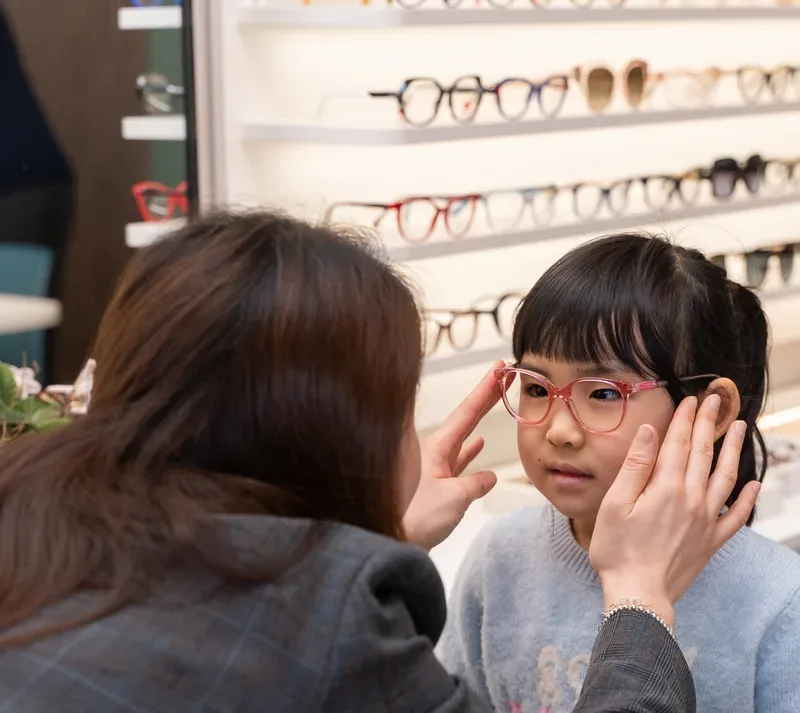
When to start myopia control
Why acting early matters, and how we tell when.
Why are my eyes dry when I wake up?
From the blog: night-time dryness explained.
Written and reviewed by Dr Mark Joung, B.Optom (Hons) UNSW · Certificate in Ocular Therapeutics (ACO) · Clinically reviewed November 2026
Principal optometrist at Concord Eyecare. Member of the Orthokeratology Society of Oceania and one of the first optometrists in Australia to fit MiyoSmart.
References (10)
- Wolffsohn JS, Kollbaum PS, Berntsen DA, et al. IMI Clinical Myopia Control Trials and Instrumentation Report. Invest Ophthalmol Vis Sci. 2019;60(3):M132-M160.
- Gifford KL, Richdale K, Kang P, et al. IMI Clinical Management Guidelines Report. Invest Ophthalmol Vis Sci. 2019;60(3):M184-M203.
- Tideman JWL, Polling JR, Vingerling JR, et al. Axial length growth and the risk of developing myopia in European children. Acta Ophthalmol. 2018;96(3):301-309.
- Tideman JWL, Snabel MCC, Tedja MS, et al. Association of axial length with risk of uncorrectable visual impairment for Europeans with myopia. JAMA Ophthalmol. 2016;134(12):1355-1363.
- McCullough SJ, Adamson G, Breslin KMM, McClelland JF, Doyle L, Saunders KJ. Axial growth and refractive change in white European children and young adults: predictive factors for myopia (NICER growth charts). Sci Rep. 2020;10:15189.
- Cho P, Cheung SW. Retardation of myopia in orthokeratology (ROMIO) study: a 2-year randomized clinical trial. Invest Ophthalmol Vis Sci. 2012;53(11):7077-7085.
- Lam CSY, Tang WC, Tse DY, et al. Defocus Incorporated Multiple Segments (DIMS) spectacle lenses slow myopia progression: a 2-year randomised clinical trial. Br J Ophthalmol. 2020;104(3):363-368.
- Chamberlain P, Peixoto-de-Matos SC, Logan NS, et al. A 3-year randomized clinical trial of MiSight lenses for myopia control. Optom Vis Sci. 2019;96(8):556-567.
- Yam JC, Jiang Y, Tang SM, et al. Low-Concentration Atropine for Myopia Progression (LAMP) study. Ophthalmology. 2019;126(1):113-124.
- ZEISS. IOLMaster 500 technical data sheet.
Tags: axial length · myopia · children's vision
See your child's growth chart
A Children's Myopia Assessment measures axial length and plots it on your child's own chart.