
Why are my eyes dry when I wake up?
What causes it, what you can do at home, and when to get it assessed

Dr Nikki Peng, Optometrist
Short answer
Usually it is lids that do not fully close in sleep, blocked oil glands or dry bedroom air.
The overnight basics
Why are my eyes so dry first thing in the morning?
Overnight you blink far less and tear production slows, so your tear film is thinnest by morning.
If tears also evaporate too quickly (from partly open lids, poor-quality oil or dry room air), you wake with dry, gritty or blurry eyes that ease after a few blinks.
The hidden cause
Could I be sleeping with my eyes slightly open?
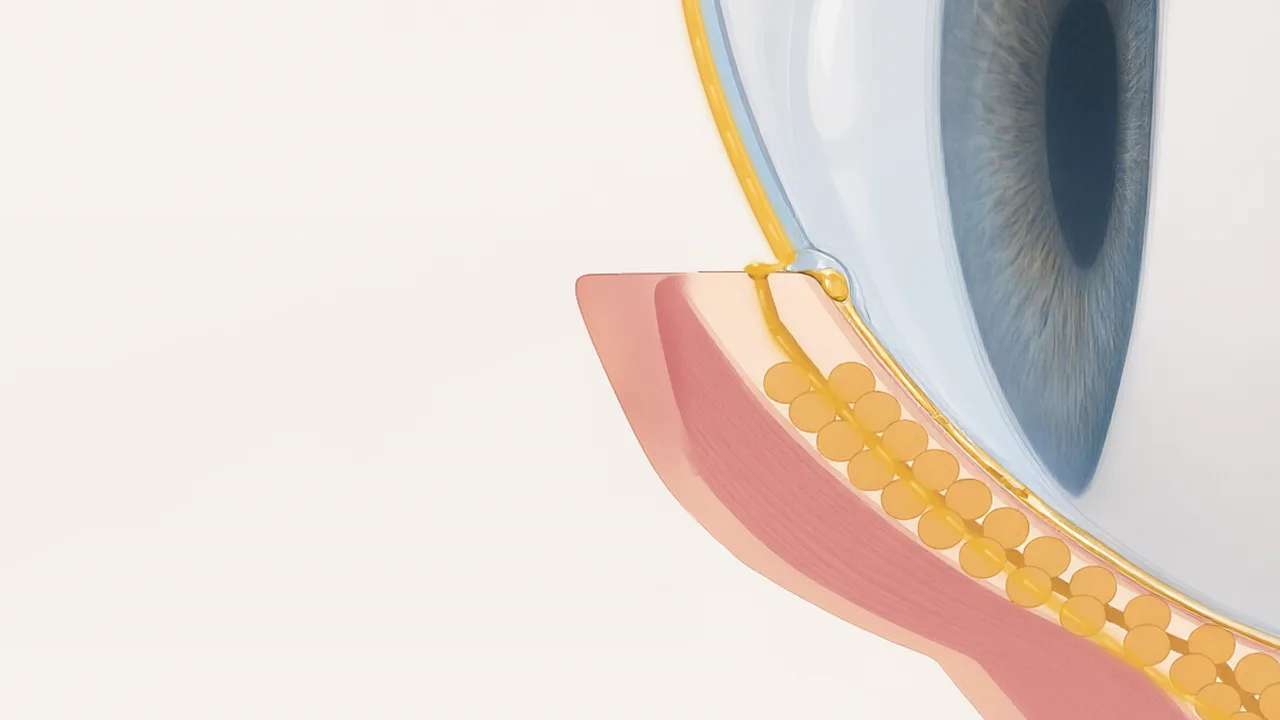
Many people sleep with their eyelids not fully closed (nocturnal lagophthalmos) and have no idea they do it.
A small gap
Tears evaporate all night
Even a small gap exposes the eye surface while you sleep.
Often missed
It happens while you are asleep
Someone notices your eyes look slightly open, or an eye exam picks it up.
Mask or ointment
Once it is identified
It is very manageable, often with an overnight moisture mask or lubricating ointment.
Research has linked nocturnal lagophthalmos with dry-eye disease and poorer sleep quality.1
Crusty or stuck-shut lids
Why are my eyelids crusty or stuck shut in the morning?
Crusting usually points to the eyelid margins rather than the eye surface itself.
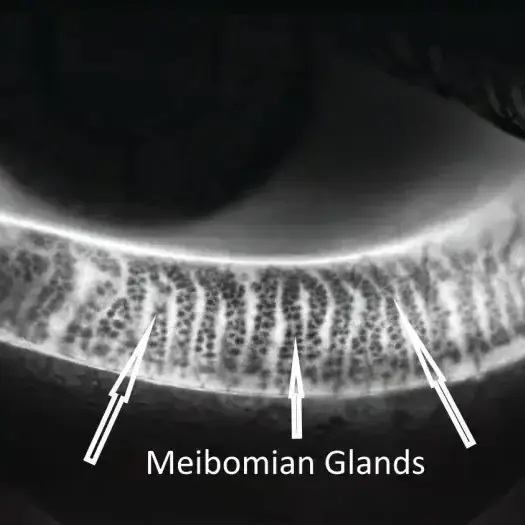
It most often relates to blepharitis or meibomian gland dysfunction, where oil and debris build up along the lash line overnight. Each has its own causes and treatment, covered on its own page.
For the oil-gland (MGD) side, a warm-compress mask can help. You microwave it and hold it over closed eyes for about ten minutes (it isn't worn overnight). We stock these in practice.
Your bedroom
Can my bedroom be drying my eyes out overnight?
Often it can. Moving or dry air from air-con, fans and heaters speeds up tear evaporation.
In the practice
"The pattern I see most is a fan or air-con vent pointed straight at the bed, or a CPAP mask that has loosened and is venting air up toward the eyes."
Small changes help. Redirect the airflow, try a bedroom humidifier or an overnight moisture-chamber mask. If you use CPAP, check the mask fit with your sleep provider.
The mask (or goggles) forms a small humid space over the eyes, which slows tears evaporating overnight. We can advise on the right one at your Dry Eye Assessment Package.
Medications
Can medications cause dry eyes in the morning?
Yes. Several common everyday medicines can reduce tear production.
Fewer tears
Some everyday medicines
Antihistamines, some blood-pressure and antidepressant medications, and decongestants.
On waking
Hours without blinking
The reduced tear supply shows up most in the morning.
Ask first
Never stop or change it yourself
Mention it to your optometrist or GP.
This is a recognised side effect, not a reason for alarm. The dryness can usually be managed around the medication with lubricants or other measures, so you keep the treatment you need. At a Dry Eye Assessment Package we ask what you take, because it often explains part of the picture.
When to get it checked
When should I see an optometrist about morning dry eye?
When dryness, blur or stinging happens most mornings or drops only help briefly.
A dry-eye assessment works out which cause is driving your symptoms (lid closure, oil-gland function, environment or medication). Drops off the shelf soothe the surface but cannot fix a lid that stays open at night or a blocked oil gland.
Depending on what we find, the answer might be a simple change at home, a lid-care routine, IPL for evaporative dry eye, or attention to omega-3 and tear quality. The point is to match the fix to the cause.
In short
What to take away
Overnight evaporation is the common thread
You blink less and make fewer tears while you sleep.
Slightly open lids are under-recognised
One of the first things to check if you wake sore every day.
Persistent morning dryness deserves an assessment
Find the specific cause rather than masking symptoms with drops.
Common questions
Morning dry eye, answered
Is it normal to wake up with dry eyes every morning?
Occasional morning dryness is common and usually settles once you are up and blinking. Daily dryness is not something to live with. It usually means a specific, treatable cause such as incomplete lid closure or oil-gland blockage. If it happens most mornings, it is worth having your eyes assessed.
Why do my eyes feel better later in the day?
Once you are awake and blinking normally, each blink spreads a fresh layer of tears and squeezes oil from the glands along your lash line, rebuilding the tear film that thinned overnight. That is why the grittiness on waking often eases within minutes to an hour of getting up.
Will eye drops fix morning dry eyes?
Lubricating drops help the symptoms and are a reasonable first step, but they do not fix an underlying cause such as lids that stay slightly open at night or blocked oil glands. If drops only give brief relief, that is a sign the root cause needs identifying and treating directly.
Can dry eyes in the morning be a sign of something serious?
Usually not. Morning dryness is common and rarely serious. But persistent cases point to an underlying cause worth treating, and ongoing surface dryness can affect comfort and vision over time. A dry-eye assessment sorts the simple causes from the ones that need ongoing management.
Can screens make dry eyes worse?
They can add to it. People blink less often and less fully while concentrating on a screen, so tears evaporate faster during the day.2 Regular breaks help. If your eyes are also dry every morning, an assessment looks for the cause behind both.

Written and clinically reviewed by Dr Nikki Peng, Optometrist, Concord Eyecare · B.Optom (Hons, First Class) UNSW · Grad Cert Ocular Therapeutics UNSW · Clinically reviewed 20 July 2026
Nikki has a special interest in dry eye disease and IPL therapy.
References (2)
- Takahashi A, Negishi K, Ayaki M, Uchino M, Tsubota K. Nocturnal Lagophthalmos and Sleep Quality in Patients with Dry Eye Disease. Life (Basel). 2020;10(7):105. PMID 32635438.
- Wolffsohn JS, Lingham G, Downie LE, et al. TFOS Lifestyle: Impact of the digital environment on the ocular surface. Ocul Surf. 2023;28:213-252.