
Ortho-K safety
Are ortho-K lenses safe?
Yes, with proper hygiene. Serious infections are rare.
About 1 in 2,000children a yearhad a serious eye infection in a 2021 study of children in ortho-K. Bullimore et al. 2021: 5 per 10,000 years of wear. An earlier US study found 14 (Bullimore 2013).
Similarto daytime soft contact lensesthe 2021 study authors found. Authors' conclusion, Bullimore et al. 2021. Published daily soft lens rates run from about 2 per 10,000 (all ages, Stapleton 2008) to 15 (teenagers, Bullimore 2017).
- ★ 4.9 from 200+ Google reviews
- Advanced qualifications in children's vision All of our optometrists hold advanced qualifications in children's vision
- 2,500+ children cared for by our optometrists
- 1,000+ ortho-K lenses fitted between our optometrists
The numbers
How often do ortho-K infections happen?
Four published rates of serious infection per 10,000 years of lens wear.
2
Daytime soft lenses, all ages
1.9 per 10,000 wearers a year. Stapleton et al. 2008, Ophthalmology, Australia.
5
Ortho-K, children, Moscow study
Moscow, 2018: 4.9 to 5.3 per 10,000 patient-years. Bullimore et al. 2021, Eye & Contact Lens.
14
Ortho-K, children, earlier US study
13.9 per 10,000 patient-years (all ages 7.7, adults 0). Bullimore et al. 2013, Optometry and Vision Science.
20
Overnight soft lenses, all ages
19.5 per 10,000 wearers a year. Same Australian study.
5 in 10,000 is about 1 child in 2,000 a year; 14 is about 1 in 700. Teenagers in daily soft lenses: 15 per 10,000 patient-years (Bullimore 2017 review). Vision loss from any contact lens infection: 0.6 per 10,000 wearers a year (Stapleton 2008).
The risk
What can go wrong?
Corneal infection can cause lasting harm.
The overnight reshaping reverses when wear stops. In a review of 170 papers, mild corneal staining was the commonest complication and infection the serious one (Liu and Xie 2016); an 18-year follow-up of 300 patients recorded one infection, in an adult (Gispets et al. 2022).
Causes
What causes ortho-K infections?
Water on lenses is the common thread in published case series.
Tap water on lenses
Tap rinsing, water storage or washing cases in the sink. Acanthamoeba, linked to tap water, was found in a third of 123 cases (Watt and Swarbrick 2007). No bottled or boiled water: contact lens solution only.
Swimming or showering in lenses
Pools, spas and showers carry bacteria lenses trap against the eye. Remove lenses first.
Old cases and expired solution
Cases develop invisible bacterial film after a month. Opened solution past its date can become contaminated. Replace both monthly.
Wearing through discomfort
Continuing to wear lenses despite pain or redness was a factor in the first 50 cases reviewed (Watt and Swarbrick 2005).
Why extra care
Why does ortho-K need extra care?
Three things set ortho-K apart from daytime lenses.
Worn overnight
Lenses worn in sleep carry more infection risk than daytime wear (Stapleton et al., 2008).
Worn by children
An adult supervises the routine every night.
Solution only
Lenses and the case never touch water of any kind.
The hygiene rules
What are the hygiene rules for ortho-K?
One rule matters most. No tap water, ever.
Solution only
For rinsing, storing and cleaning the case.
New case monthly
A new case comes with each monthly Soleko Platinum bottle.
Clean, dry hands
Soap and water, then a lint-free towel, every time.
Stop at any sign
Red eye, pain or blur: lenses out, and call us that day.
Never
- Tap water on lenses or the case
- Bottled or boiled water
- Swimming or showering in lenses
- Wearing through redness or pain
Warning signs
When should the lenses come out?
For any sign below: remove lenses and call or text your optometrist's direct mobile that day.
Persistent redness
Redness that persists after lens removal.
Eye pain
Any pain.
New light sensitivity
Squinting at previously comfortable light.
Persistent blur
Blurry vision a few hours after lens removal.
Ortho-K families have their treating optometrist's direct mobile, bypassing reception. If you can't reach us and it's urgent, go to the nearest eye hospital emergency department. We prefer a false alarm to a missed sign.
At Concord Eyecare
What we do to make ortho-K safer
Five treatment habits reduce what you need to remember.
Day 1
A guide taught in person
At fitting, we teach you and your child the guide's rules, warning signs and when to act.
Every month
A fresh case with each bottle
Each monthly Soleko Platinum solution bottle includes a new case. Change both together.
Every review
Corneal microscope check
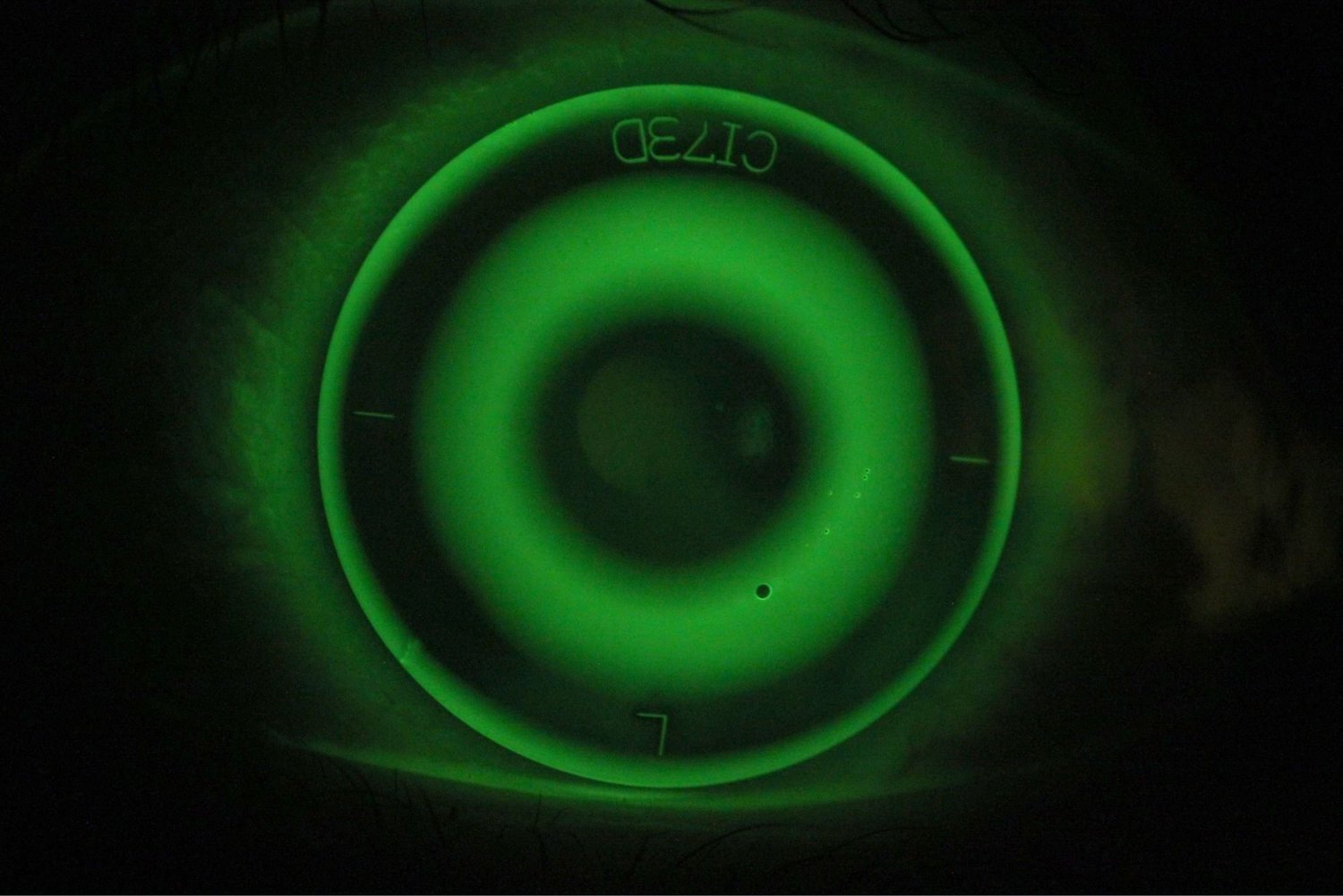
Slit lamp examination with fluorescein dye alongside vision checks can detect early irritation or infection.
First months
Reviews at 1 day, 1 week, 1 month
Then every 3 to 6 months. Early detection can ease treatment.
Any time
Your optometrist's direct mobile
Ortho-K families can call or text their treating optometrist, including Sunday nights.
Ortho-K for your child? The assessment tells you.
Not for every child
When we suggest a different treatment
Ortho-K suits many children, not every child. We suggest another treatment if any of these apply.
Your child can't report problems
Usually under about 6. Maturity matters more than age; we assess it at consultation and first review.
Nightly bathroom supervision isn't practical
Hygiene requires an adult nearby every night.
Travel makes reviews difficult
Scheduled reviews are part of treatment.
Tank or bore water at home
Without proper filtration, water risk is too high.
We can't predictably correct the prescription
Very high myopia, irregular corneas or significant astigmatism.
Hygiene slips at first review
We prefer changing treatment to accepting risky habits.
Alternatives: MiyoSmart glasses, MiSight daily contact lenses or low-dose atropine eye drops, prescribed when suitable. We explain them at consultation.
Questions
Ortho-K safety questions
Can my child swim while wearing ortho-K lenses?
No. Remove lenses before swimming, showering or any water activity. Pools, spas and showers carry organisms lenses can trap against the eye.
What should I do if my child gets a red eye on holiday?
Remove the lenses and call or text your optometrist's direct mobile, which ortho-K families have for this reason. Bring the lenses and case to the appointment.
How often does the lens case need replacing?
Monthly. We recommend Soleko Platinum because each monthly solution bottle includes a fresh case. Change both together.
Is ortho-K safer than soft contact lenses?
Published ortho-K rates in children are about 5 to 14 serious infections per 10,000 years of wear (Bullimore 2021, 2013). Daily-wear hydrogel soft lenses run about 2 per 10,000 across all ages and overnight soft lenses about 20 (Stapleton 2008); teenagers in daily soft lenses about 15 (Bullimore 2017). The profiles differ; ortho-K falls between daily and overnight soft lens wear.
What happens if my child sleeps in the lenses an extra night?
Usually nothing, but the lenses are designed for one night's sleep. Making it a habit raises the infection risk.
Can the lenses permanently damage my child's eyes?
The reshaping is temporary and reverses when wear stops. An untreated infection can cause lasting harm, so we examine the cornea under magnification at every visit.
What is the earliest sign of a problem?
Redness that stays after the lenses are out, or any eye pain. For either: stop wearing and call us that day.
What if I'm not sure my child is mature enough?
Maturity matters more than exact age. We assess it at the consultation and first review, and change treatment if the routine isn't working.

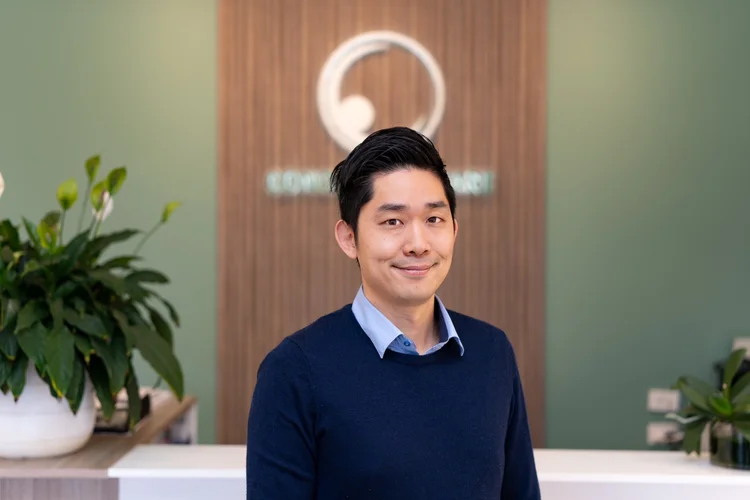
Reviewed by Dr Mark Joung, B.Optom (Hons) UNSW, Certificate in Ocular Therapeutics (ACO), Advanced Paediatric Eye Care (UNSW) | Updated November 2026
The 2,500+ and 1,000+ figures come from our optometrists' practice records across their careers (October 2026).
References (8)
- Bullimore MA, Sinnott LT, Jones-Jordan LA. The risk of microbial keratitis with overnight corneal reshaping lenses. Optometry and Vision Science. 2013;90(9):937-944. doi:10.1097/OPX.0b013e31829cac92
- Bullimore MA, Mirsayafov DS, Khurai AR, et al. Pediatric microbial keratitis with overnight orthokeratology in Russia. Eye Contact Lens. 2021;47(7):420-425. doi:10.1097/ICL.0000000000000801
- Stapleton F, Keay L, Edwards K, et al. The incidence of contact lens-related microbial keratitis in Australia. Ophthalmology. 2008;115(10):1655-1662. doi:10.1016/j.ophtha.2008.04.002
- Bullimore MA. The safety of soft contact lenses in children. Optometry and Vision Science. 2017;94(6):638-646. doi:10.1097/OPX.0000000000001078
- Liu YM, Xie P. The safety of orthokeratology: a systematic review. Eye Contact Lens. 2016;42(1):35-42. doi:10.1097/ICL.0000000000000219
- Gispets J, Yébana P, Lupón N, et al. Efficacy, predictability and safety of long-term orthokeratology: an 18-year follow-up study. Contact Lens and Anterior Eye. 2022;45(1):101530. doi:10.1016/j.clae.2021.101530
- Watt K, Swarbrick HA. Microbial keratitis in overnight orthokeratology: review of the first 50 cases. Eye Contact Lens. 2005;31(5):193-197. doi:10.1097/01.icl.0000179705.23313.7e
- Watt KG, Swarbrick HA. Trends in microbial keratitis associated with orthokeratology. Eye Contact Lens. 2007;33(6 Pt 2):373-377. doi:10.1097/ICL.0b013e318157cd8d
Find out if ortho-K suits your child
Call or book online. We check suitability and tell you if another treatment fits better.