
Precision multifocals & progressive lens fitting in North Strathfield
Tried multifocals and hated them? That's a fitting problem, not a you problem.

- ★ 4.9 from 200+ Google reviews
- Additional qualifications All of our optometrists hold additional qualifications to deliver a high standard of care
- All health funds HICAPS on the spot
Most problems with multifocal glasses (also called progressive lenses) come down to three things: wrong measurements, wrong lens design for your lifestyle, or wrong frame choice. We fix all three with precise measurements, personalised lens selection, and the time to get it right.
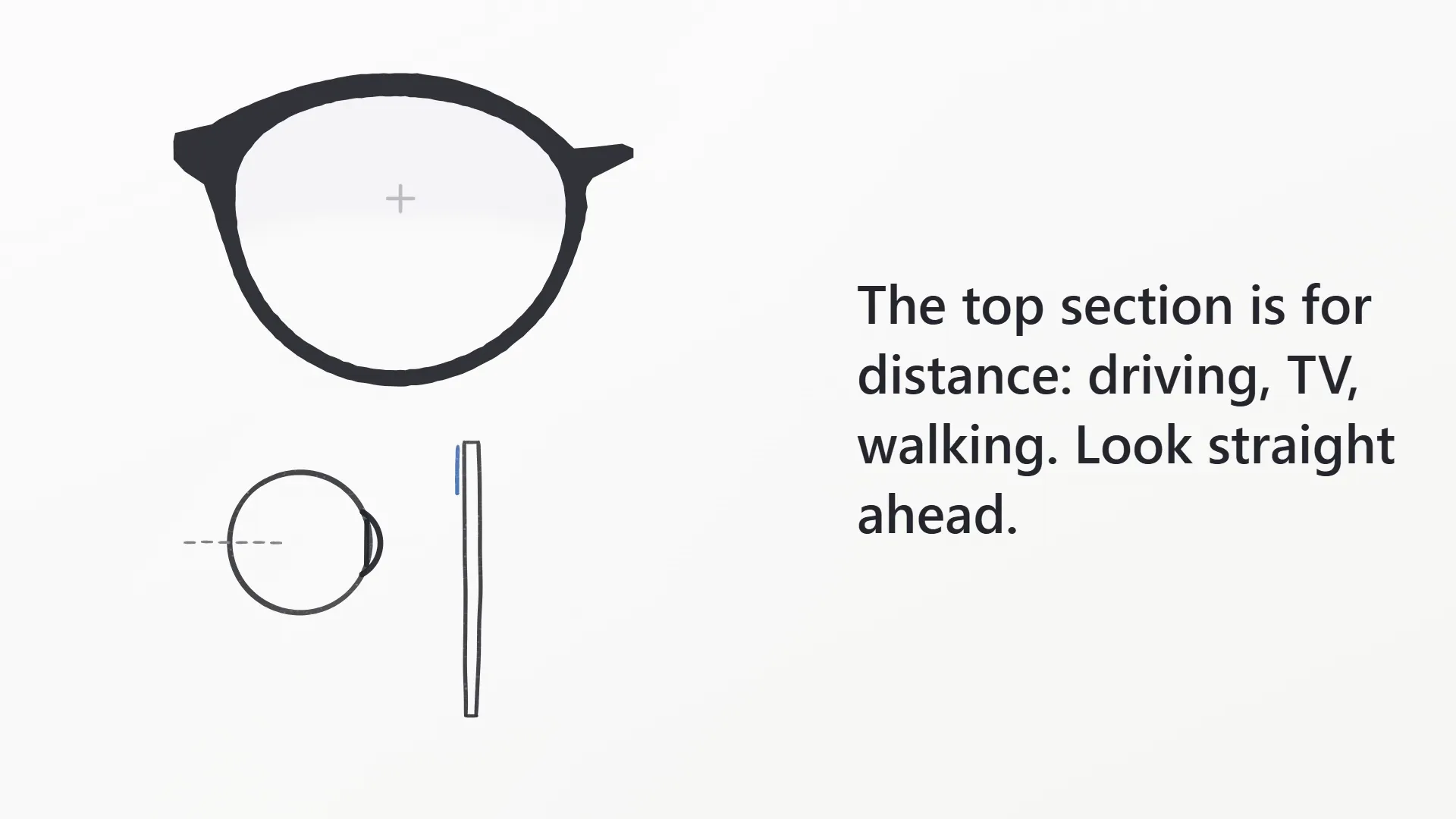
Most people adapt within a few weeks when the measurements are right.
How Multifocal Glasses Work
Three pairs of glasses in one. If they’re fitted right.
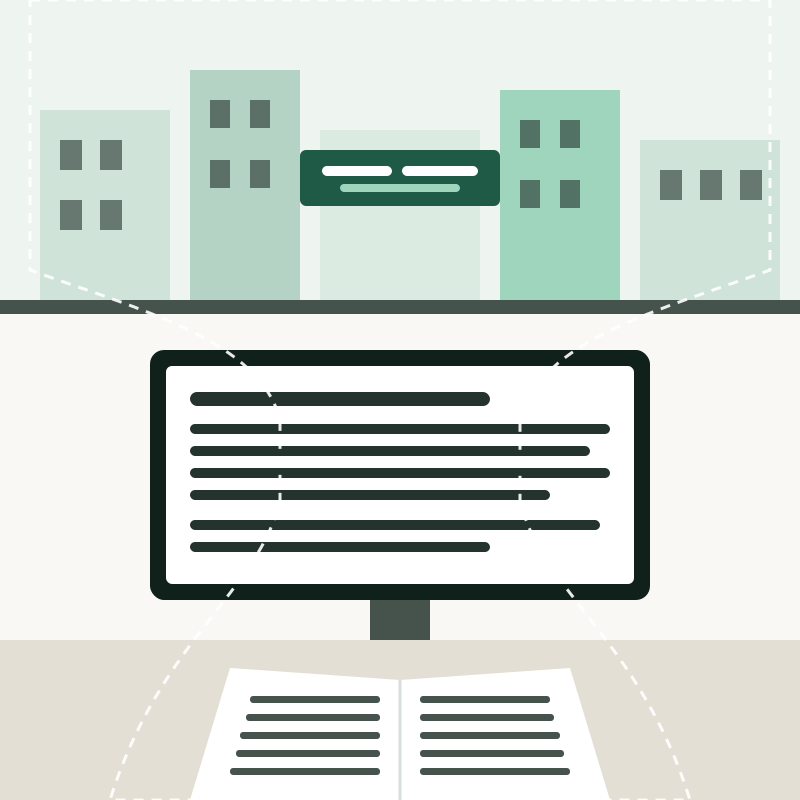
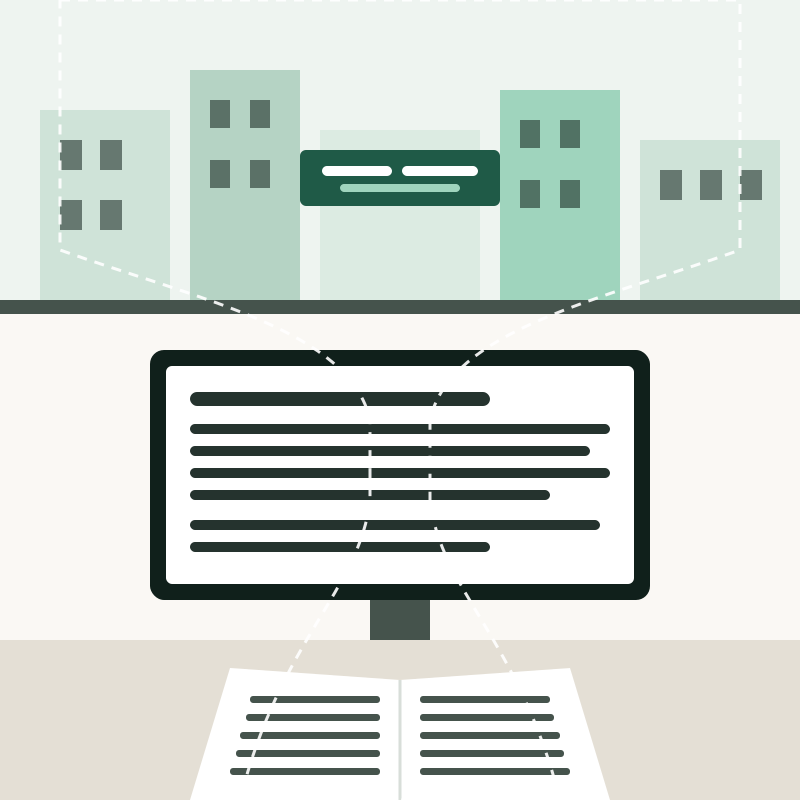
Standard design
Wider corridor
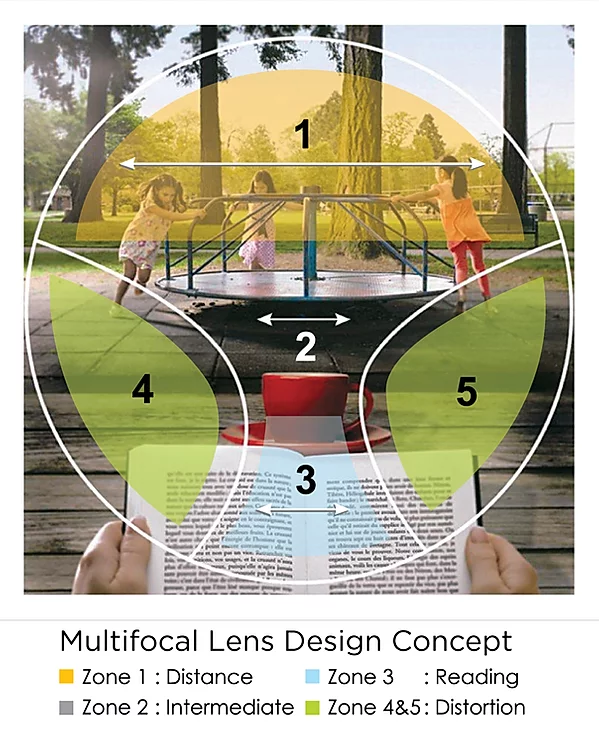
Multifocal glasses blend your distance, intermediate, and reading prescriptions into a single lens with no visible lines. You look through the top for driving, the middle for your computer, and the bottom for reading.
The clear zones are connected by a narrow corridor that runs down the centre of the lens. On either side of that corridor, vision blurs. That's an unavoidable trade-off of the physics. But how much blur, how wide the clear zones are, and how quickly you adapt all depend on two things: the quality of the lens design and the precision of the fitting.
When both are right, multifocals work beautifully. When either is off, they're the pair you shove in a drawer.
Common Problems with Multifocal Glasses
The three reasons your multifocal glasses aren't working
Tried multifocals and given up? Putting up with headaches, neck pain, and that "swimming" feeling? The lens probably isn't the problem.
Multifocal Troubleshooting Guide
I have to lift my chin or tilt my head back to read my phone.
Often causes neck pain by the end of the day.
I feel dizzy or "swimmy" when walking down stairs.
The ground seems to move or distort in your peripheral vision.
My computer screen is blurry unless I lean uncomfortably close.
The "middle" part of the lens feels too narrow to use easily.
Precision Lens Fitting & Optical Measurements
Why measurements matter more than the lens brand you choose
This is the part most patients never hear about. It's the reason many multifocals fail. A premium lens with inaccurate measurements will perform worse than a mid-range lens fitted precisely. The measurements are the foundation everything else is built on.
Every multifocal fitting starts with a precise refraction during a comprehensive eye examination. The prescription baseline matters more than the lens brand.
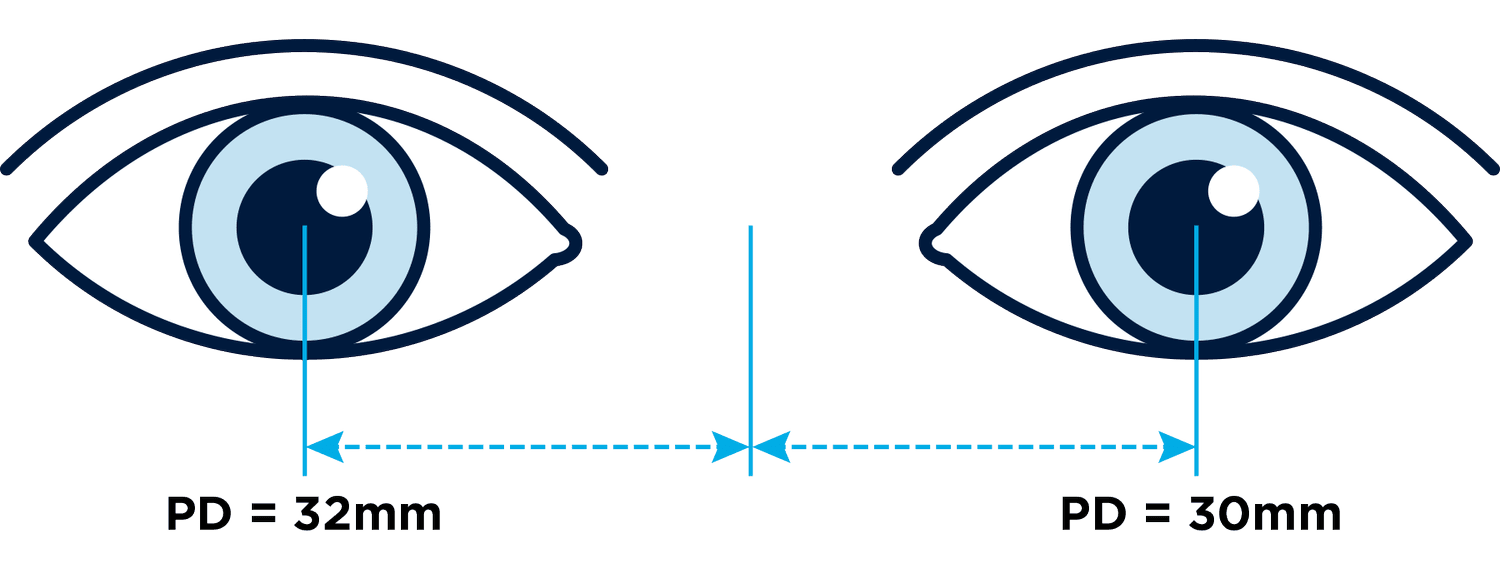
Pupil distance — and why each eye is measured separately
Your pupil distance (PD) tells us where to position the optical centre of each lens so it lines up with your line of sight. Almost nobody has a perfectly symmetrical face — your right eye and left eye sit at slightly different distances from your nose. That's why we measure each eye individually (monocular PD), not a single number across both.
If the PD is off by even 2mm, the corridor of clear vision shifts to one side. On a higher prescription, the effect is larger still. You'd be looking through the distortion zone and wondering why your "expensive" lenses feel terrible.
Fitting height — the vertical alignment
Fitting height tells us where to position the transition point of the lens relative to your pupil when you're looking straight ahead. If it's set too low, you'll look through the intermediate zone when you should be looking through distance, so your far vision feels blurry. If it's too high, you can't find the reading zone without dropping your chin to your chest.
This measurement depends entirely on the specific frame you've chosen and how it sits on your face. It changes with every frame. It can't be copied from a previous pair.
How your frame sits — tilt, distance, and wrap
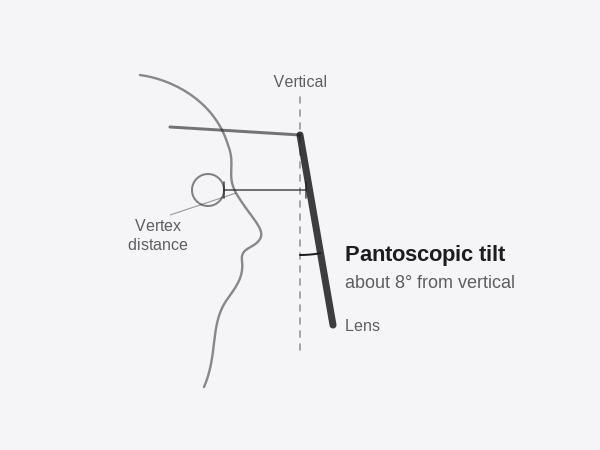
Three additional measurements affect how well a multifocal lens performs. Pantoscopic tilt is the vertical angle of the frame: how much it tilts forward. Back vertex distance is how far the lens sits from your eye. Wrap angle is how the frame curves around your face. Premium lens designs use all three to calculate the optics for your specific wearing position.
Without these measurements, the lens falls back to industry-average defaults: typically 8° tilt, 5° wrap, 12mm from the eye. If your frame doesn't match those averages (and most don't), part of the personalisation you're paying for goes to waste.
The bottom line from the research is clear: individually measured multifocal lenses consistently outperform every other design tier. Even with small measurement imperfections, personalised lenses still beat standard off-the-rack designs. But the benefit scales directly with measurement precision. That's why we take the time to get every number right.
Individualised lenses
What is an individualised digital freeform lens?
A multifocal lens calculated for your prescription, your frame and how it sits on your face.
Cut point by point
A digital freeform cutter shapes the surface, so the design can be calculated for you.
Your measurements go in
Pupil distances, fitting heights, tilt, wrap and how far the lens sits from your eye.
Tested in a masked trial
Wearers preferred customised freeform lenses over a standard design (Han et al., 2011).
Poorly measured fittings can cancel out the benefit of an individual design, which is why the fitting comes first (Pascual et al., 2023).
Ready to get your lenses fitted properly?
Our Concord Eyecare Multifocal Fitting Process
What expert, personalised fitting actually looks like.
01
Lifestyle assessment
How you spend your day: screen time, driving, hobbies, work. This decides which lens design will suit you.
02
Precise measurements
Pupil distance and fitting height for each eye, plus tilt, vertex distance and wrap for your frame. Not a quick ruler across your nose.
03
Frame selection guidance
Frames that suit your lenses and your face: enough depth for the corridor and a stable bridge. The frame is part of the optics.
04
Personalised lens selection
The design and tier that suit your measurements, lifestyle and budget. We recommend on your needs, not a supplier deal.
05
Final frame adjustment
We adjust the frame to sit exactly as measured; a 1mm shift can push you into the distortion zone.
06
Adaptation coaching & follow-up
What's normal in the first week and when to come back. After two weeks, we re-check the fitting first, not the lens.
How to Adjust to New Multifocal Lenses
Worried about adapting? Here's what your brain is actually doing
Adaptation is the number one concern patients raise about multifocal glasses. With a properly fitted, personalised lens, most people adapt within 1–2 weeks; first-time wearers may need 3–4 weeks. The first few days are the hardest.
What your brain is doing
Your brain has to learn where each zone of the lens is. That's why things feel "off" at first. You might notice blur at the sides when you turn your head, a slight swimming sensation, or uncertainty on stairs. This is normal, and it usually settles in 7–10 days.
What makes adaptation easier
First, lens quality. Premium personalised designs with wider corridors and less distortion at the sides produce measurably faster adaptation. In one randomised trial, wearers preferred customised freeform lenses over standard designs (Han et al., 2011).
Second, fitting accuracy. When the measurements are right, your line of sight falls through the correct zone at each distance. When they're off, your brain compensates constantly, and that's when people give up.
Third, your addition power. Higher additions (which increase with age) mean narrower corridors. That's physics, and it's exactly when precise fitting and premium designs matter most.
What to do in the first two weeks
Wear them full-time from day one; switching back to your old glasses resets the clock. Point your nose at what you want to see rather than just moving your eyes. Start at home before stairs, driving or busy places. Most of the discomfort resolves within the first week.
Still struggling after two weeks? Come back. We'll re-check the fitting height, pupil distances and frame adjustment. The answer is almost always in the measurements, not the lens.
Comparing Standard vs. Personalised Multifocal Lenses
Not all multifocal lenses are the same. Here's what the tiers mean.
Higher tiers cost more, and they give you measurably wider clear vision and faster adaptation. Here's what each level actually does for you.
Standard
Conventional Design
A one-size-fits-all front-surfaced design based on factory averages. Works for straightforward prescriptions, but the clear zones are narrower and adaptation takes longer.
- Pre-set corridor design
- Fixed zone distribution
- Limited frame compatibility
- Adequate for low adds, simple scripts
Best for: simple prescriptions, lower additions, patients who don't spend long hours at screens.
Personalised
Lifestyle-Matched
A freeform design and the sweet spot for most patients, calculated from your measurements and matched to your lifestyle. Wider clear zones, less distortion, smoother adaptation.
- Lifestyle-adapted zone distribution
- Individual measurements factored in
- Binocular balancing technology
- Wider corridor and reading zones
- Better frame compatibility
Best for: most patients. Good balance of performance and value for mixed-activity lifestyles.
Fully Personalised
Individual Design
A digital freeform design and the widest, sharpest multifocal available. Your face, frame position, visual habits and prescription all go into the lens calculation.
- Full position-of-wear optimisation
- Peripheral distortion actively reduced
- Binocular harmonisation for unequal scripts
- Widest clear zones at every distance
- Fastest adaptation technology
Best for: first-timers anxious about adaptation, high adds, heavy screen users, previous failures, unequal prescriptions between eyes.
We'll recommend the right tier during your consultation. There's no pressure to go premium. There's also no point in a premium lens if it's not fitted properly.
Disclaimer: this graphic only shows lens design concepts. Premium personalised digital lenses offer wider fields of view and smoother adaptation than standard designs, but cannot entirely eliminate peripheral blur. Your vision will depend on your prescription, reading addition, frame and fitting accuracy; we discuss realistic expectations at your consultation.
Office Lenses vs. Multifocal Glasses for Computer Work
Why your multifocals don't work at the computer
This is one of the most common complaints we hear. It's not a flaw in your lenses. It's an engineering constraint of every multifocal lens with a smooth blend and no visible line.
These lenses blend from distance power at the top to reading power at the bottom. The intermediate zone, exactly where your screen sits, is the narrowest part of that blend.
So you can't scan a wide monitor without hitting blur, and you turn your whole head instead. The zone sits below the centre of the lens, so you tilt your chin up to use it, which strains your neck. And as your addition power increases with age, the corridor gets narrower still.
No smooth-blend lens can remove this, however premium. Dedicated office lenses solve it by redesigning the lens for screen distances.
Standard Multifocal
Narrow
usable intermediate zone
Head-turning, chin-tilting, neck strain
Dedicated Office Lens
Much wider
intermediate vision
Natural posture, full eye-scanning
Office lenses: a second pair for computer work
Office lenses drop the distance zone and give that area to near and intermediate vision. A standard multifocal gives only a narrow band of the lens to intermediate distances; an office lens gives it much more. That means wider clear vision at the screen and a more relaxed head posture.
We fit office lenses in three designs: close reading distance (around 1 metre), standard computer distance (2 metres) and full room coverage (4–6 metres). They don't replace your everyday multifocals for driving or outdoors, but for 6–8 hours at a desk the difference is large. In one trial, office workers rated computer-specific lenses more suitable for screen work (Cagnie et al., 2017).
Do you need office lenses? If you spend more than 4 hours a day at a screen, wear multifocal glasses, and notice neck strain, headaches, or trouble seeing your whole monitor, they are worth trying.
We fit ZEISS and HOYA lenses
We fit both, and choose the lens design that suits your eyes and how you use them.



North Strathfield Multifocal & Progressive Lens FAQs
Multifocal glasses: your questions answered
How long does it take to adjust to multifocal glasses?
Most people adapt within 1–2 weeks. First-time wearers may need up to 3–4 weeks. Wear them full-time from day one, point your nose at what you want to see, and give your brain time. If you're still struggling after two weeks, come back. We'll re-check the fitting first.
How do you choose which lens is right for me?
We start with your prescription from a comprehensive eye examination, then factor in your lifestyle: screen time, driving, close work, hobbies. Combined with your measurements and frame choice, that tells us which lens design and tier will give you the best result. We fit all major brands and recommend based on your needs.
Why does the fitting matter more than the lens brand?
It's the fitting, not the lens. Research on multifocal rechecks finds most trace back to the prescription and the measurements, not the lens itself. Our experienced team takes the time to get every measurement right.
Do I need a separate pair for computer work?
If you spend more than 4 hours a day at a screen and notice neck strain, headaches, or difficulty seeing your monitor clearly, they are worth trying. Standard multifocals squeeze computer vision into a narrow corridor. Office lenses give you much wider screen vision.
I tried multifocals before and couldn't wear them. Can you help?
Almost certainly. Most people adapt within a few weeks when the measurements are right. We'll work out what went wrong last time. It's nearly always a measurement, frame, or lens design issue — and build from there.
How much do multifocal glasses cost?
Multifocal lenses range from standard to fully personalised depending on the level of customisation. We'll discuss options and pricing during your consultation. All major health funds accepted via HICAPS for on-the-spot claims.
What frames work best with multifocal glasses?
Frames need enough vertical depth to fit the full multifocal corridor (generally 28mm minimum). They also need to sit stable and level. We'll guide you through frame selection that works for your lenses as well as your style.
Are multifocal glasses the same as bifocals?
No. Bifocals have two zones with a visible line: distance at the top, reading at the bottom, nothing in between. Multifocal glasses blend all three distances with no line. They look better, give you intermediate vision for screens and dashboards, and are the standard recommendation today.
Are progressive lenses the same as multifocal lenses?
Yes. In Australia, multifocal glasses and progressive lenses usually mean the same lens: distance at the top, screens in the middle and reading at the bottom, with no visible line. Bifocals are different, with a line and two zones only.

Medically Reviewed by Dr. Mark Joung B.Optom (Hons) UNSW, Certificate in Ocular Therapeutics (ACO) | Updated March 2026
The information on this page is drawn from peer-reviewed research, manufacturer data, and professional optical publications. We believe in transparency. Here's where the numbers come from.
References (12)
- Bist J, Kaphle D, Marasini S, et al. Spectacle non-tolerance in clinical practice — a systematic review with meta-analysis. Ophthalmic and Physiological Optics. 2021;41(3):610–622. Pooled non-tolerance prevalence of 2.1% across all spectacle types; progressive/multifocal lenses disproportionately represented.
- Beesley J, Davey CJ, Elliott DB. What are the causes of non-tolerance to new spectacles and how can they be avoided? Ophthalmic and Physiological Optics. 2022;42(3):619–632. 83% of non-tolerance rechecks attributed to poor-quality refractions.
- Pascual E, Gómez-Pedrero JA, Alonso J. Theoretical performance of progressive addition lenses with poorly measured individual parameters. Ophthalmic and Physiological Optics. 2023;43(2):244–253. 1,900 patient datasets demonstrating individual designs with accurate measurements outperform all other tiers; conventional designs showed 41% of users experiencing noticeable near vision loss.
- Alvarez TL, Kim EH, Granger-Donetti B. Adaptation to progressive additive lenses: potential factors to consider. Scientific Reports. 2017;7:2529. Vergence dynamics and phoria adaptation significantly greater in patients who successfully adapted.
- Sheedy JE, Hardy RF, Hayes JR. Progressive addition lenses — measurements and ratings. Optometry. 2006;77(1):23–39.
- Han SC, Graham AD, Lin MC. Clinical assessment of a customized free-form progressive add lens spectacle. Optometry and Vision Science. 2011;88(2):234–243. Randomised, double-masked cross-over trial (n=95); customised freeform lenses significantly preferred over standard designs (p=0.006).
- Sullivan DB. Varilux Infinity field trial results. Points de Vue. 1992;26:44–48. 720 wearers; 1.1% true non-adaptation when lenses properly fitted.
- Cagnie B, De Meulemeester K, Saeys L, et al. The impact of different lenses on visual and musculoskeletal complaints in VDU workers with work-related neck complaints: a randomised controlled trial. Environmental Health and Preventive Medicine. 2017;22:8. VDU-specific lenses rated more suitable for computer work; little difference between lens types in visual and neck comfort.
- Minkwitz G. Über den Flächenastigmatismus bei gewissen symmetrischen Asphären. Optica Acta. 1963;10(3):223–227. Foundational theorem: unwanted astigmatism perpendicular to the corridor increases at twice the rate of power change along it.
- Carl Zeiss Vision. SmartLife wearer testing — Aston University. 2023. External study (n=182); 81% of SmartLife wearers adapted within one day; 94% of Individual 3 wearers perceived wide comfortable fields for intermediate and near tasks.
- HOYA Vision Care. iD MyStyle 3 wearer study. 2024. Internal study (n=1,694); 56% faster adaptation, 57% less fatigue, 61% less swaying compared to lenses without AdaptEase/3D Binocular Vision technologies. Proprietary data, not independently peer-reviewed.
- Wittenberg S. Taking the measure of digital centration systems. 20/20 Magazine CE. 2018. ZEISS internal data: ruler-based PD measurement: average variance ~3mm across operators; digital centration systems: 0.09–0.24mm variance (10–30× more precise).
It starts with a proper fitting
Book a multifocal consultation. We'll take the time to get your measurements right, match you with the right lens, and make sure you're set up to adapt smoothly.