Intense Pulsed Light (IPL) · Sydney
IPL for dry eye: how it works and what the research shows
A light treatment for the blocked oil glands behind most dry eye.
- IPL from $800 for 4 sessions, or $850 with the Dry Eye Assessment Package · See pricing
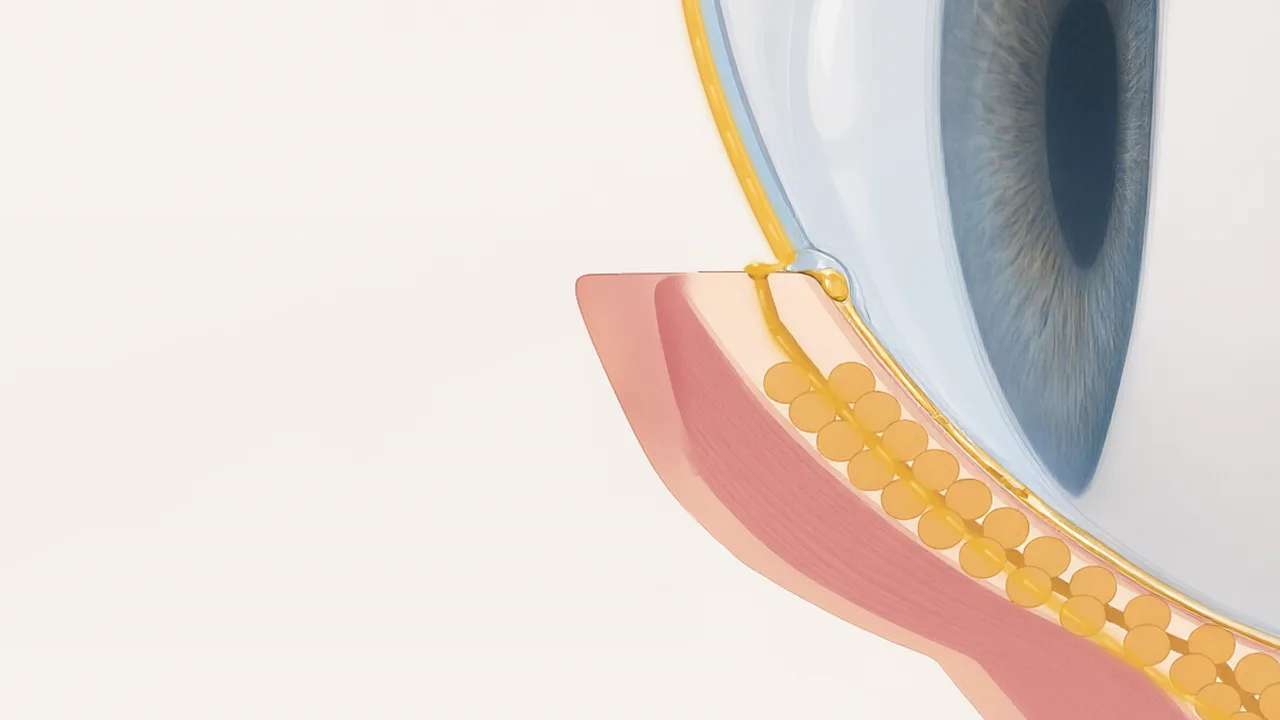
- The gland is blocked
- A pulse of light
- The oil melts
- It flows
- The oil layer is back
Dry eye
What causes dry eye?
Blocked oil glands make tears evaporate too fast; drops add water but cannot unblock a gland.
Feel it
What dry eye can feel like
Message · now
Running 10 minutes late. Can you save me a seat near the front?
- Just after a blink: the tear film is smooth, so the message reads sharp.
- A few seconds later: without enough oil the tears dry out and break up, and the words smudge until the next blink clears them.
An illustration of what many people with dry eye describe. Your own symptoms may differ.
See it
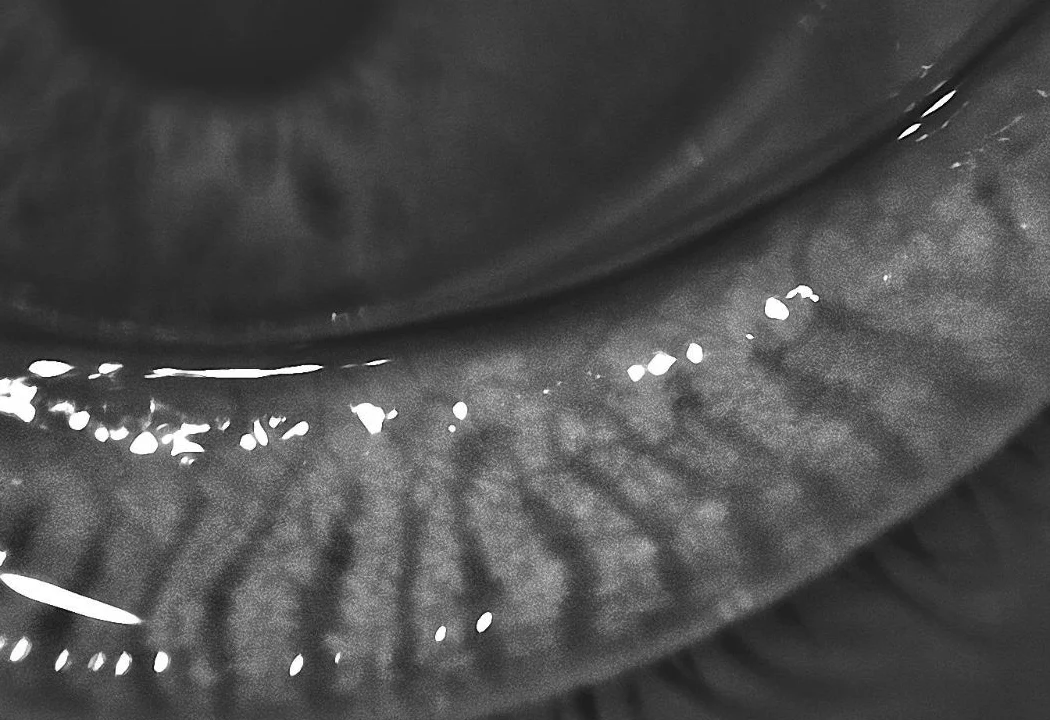
A photo of your oil glands
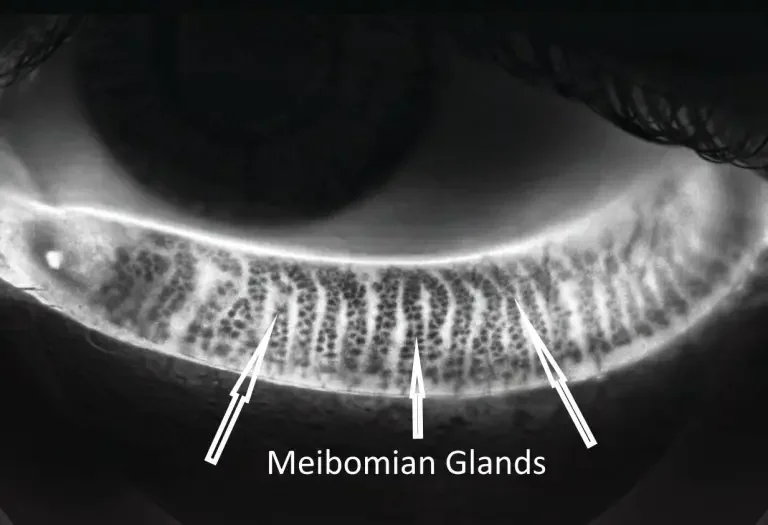
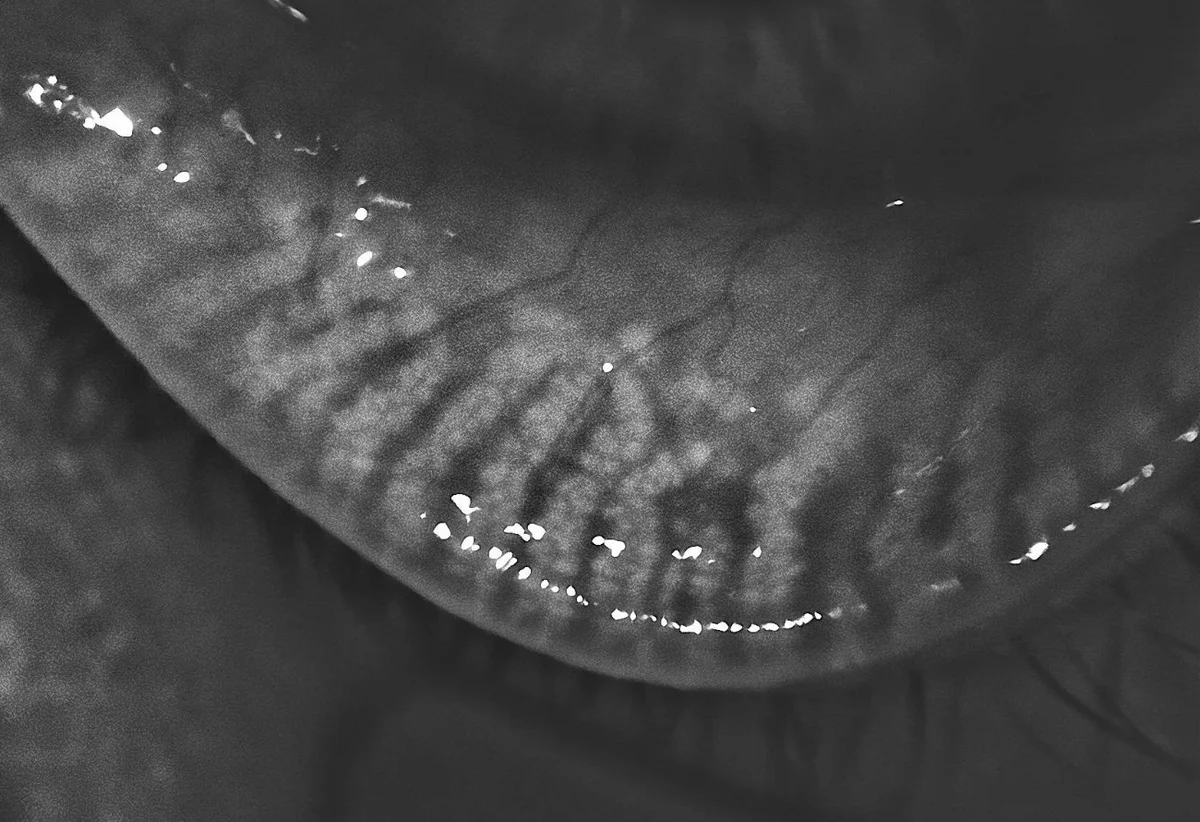
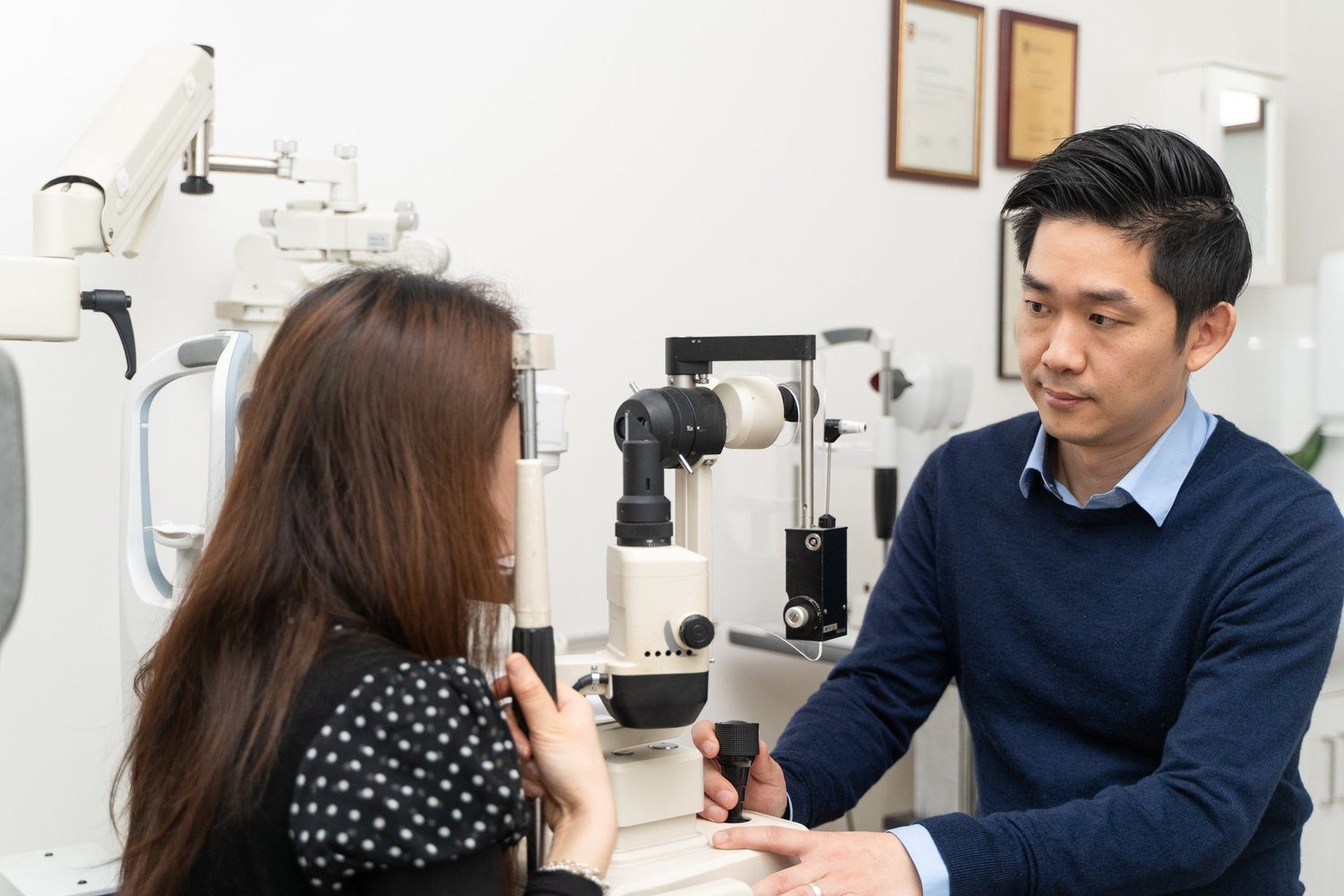
Taken with an infrared camera at your $50 Dry Eye Assessment Package. The second scan is Dr Mark Joung's own lower eyelid.
Understand it
The oil layer works like a lid on a cup
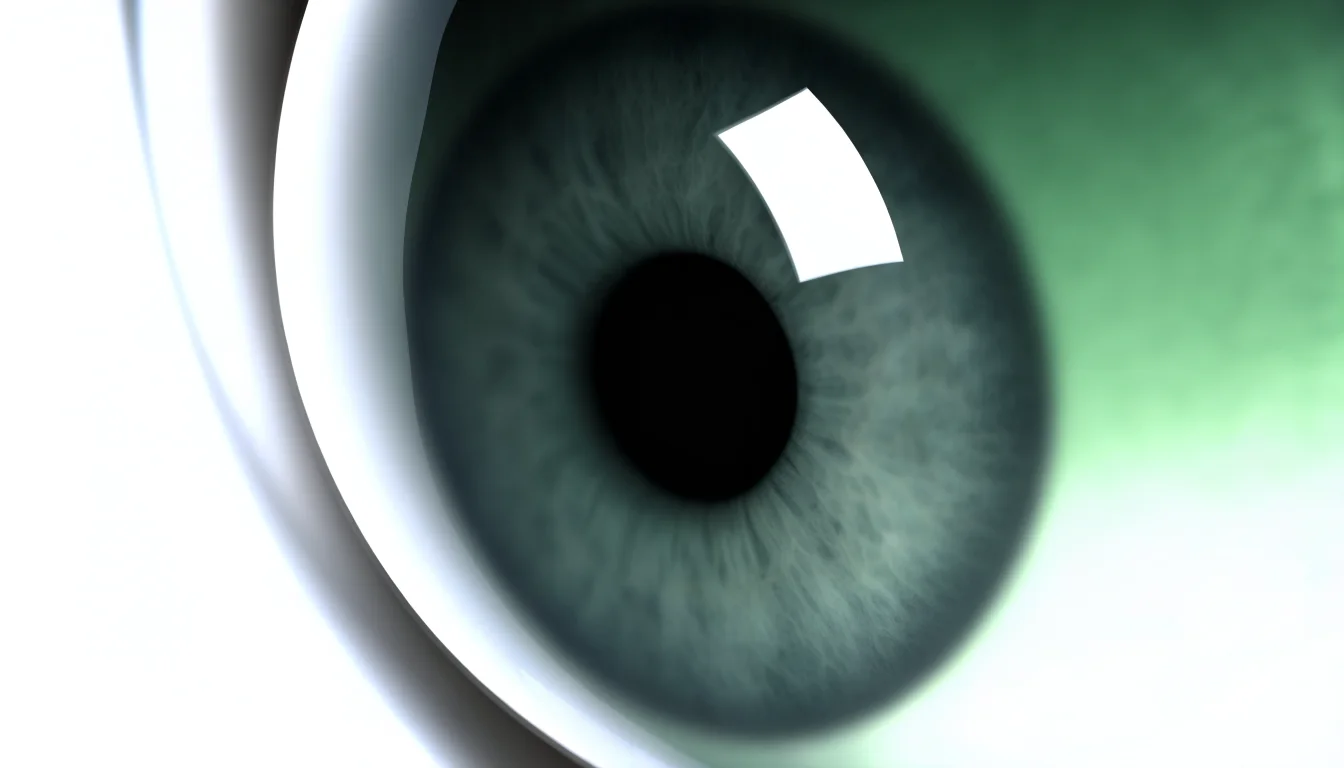
The lid
A thin layer of oil on top of your tears slows them evaporating, like a lid on a cup.
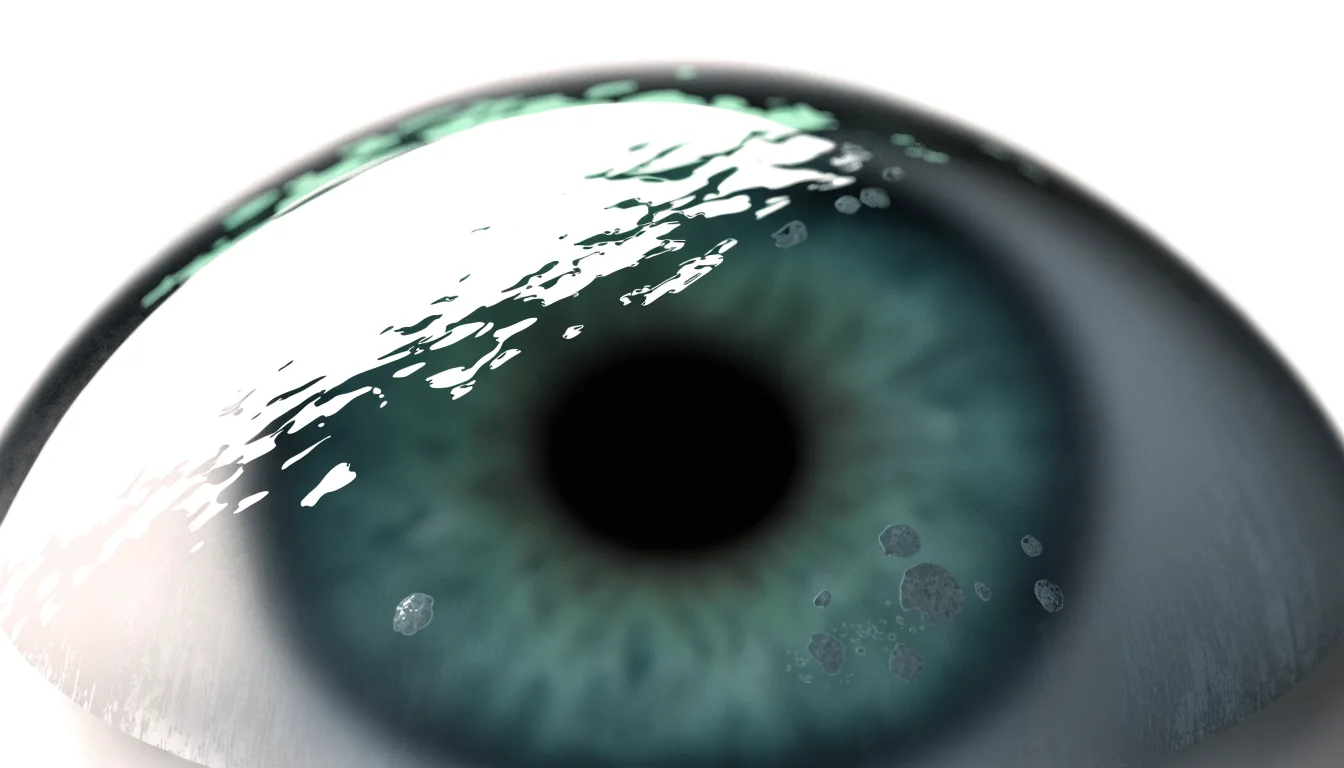
The gap
Blocked oil glands leave gaps in that lid, so tears dry out between blinks.
What we treat
IPL targets the blocked glands and the inflammation around them. The assessment checks them first.
Illustrations, not photos of a patient. Not to scale.
IPL (Intense Pulsed Light) has been used in dermatology for decades, mainly for rosacea. Around 2002, an ophthalmologist noticed that facial IPL patients said their dry eyes got better, which started more than 20 years of research. We use the E-Eye device, designed for meibomian gland dysfunction.
How IPL works
How does IPL help the oil glands?
Primary mechanism
Closing abnormal blood vessels
Inflamed blood vessels along your lid margin feed inflammatory chemicals to your glands. IPL energy is absorbed by haemoglobin, causing these vessels to close off, cutting inflammation at its source.
Primary mechanism
Reducing inflammation
IPL reduces pro-inflammatory markers in the tear film and upregulates anti-inflammatory ones. Less inflammation means your glands can recover and start producing oil normally again.
Secondary mechanism
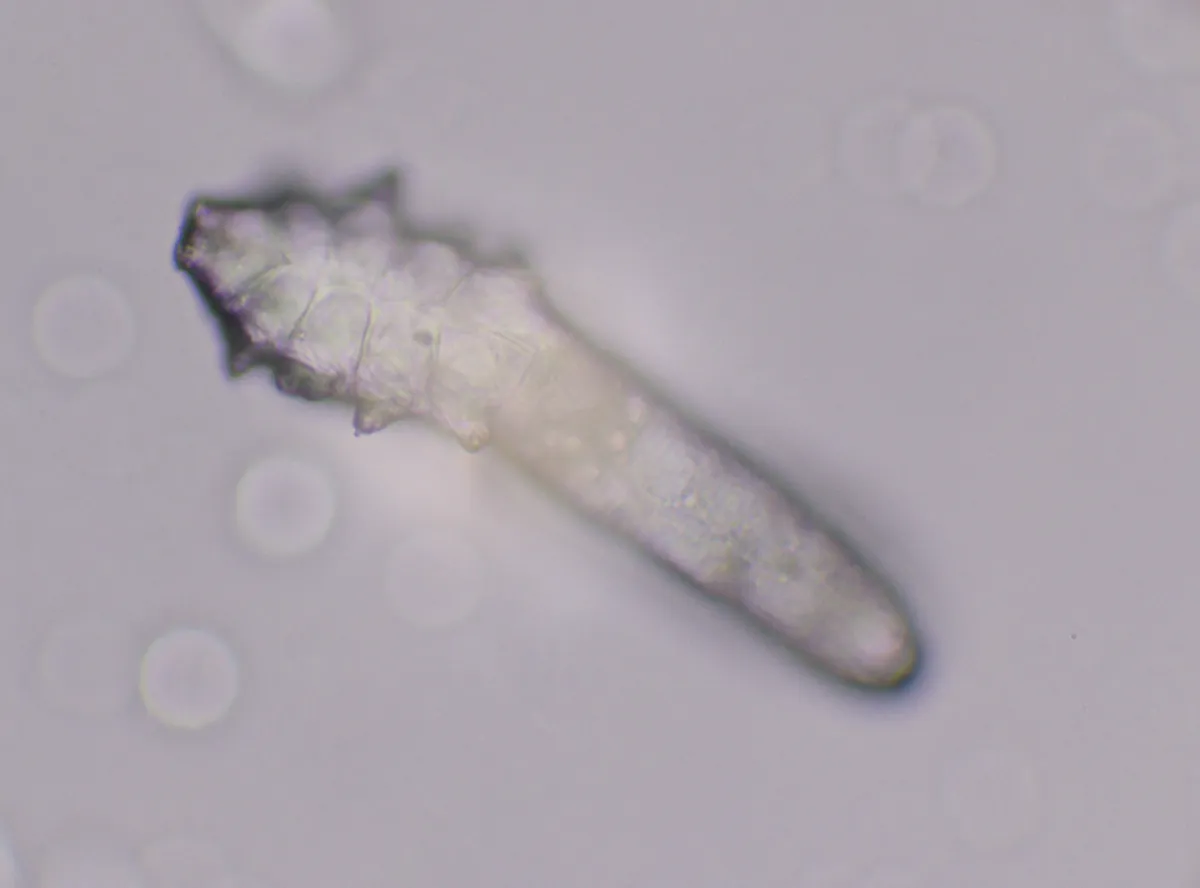
Clearing Demodex mites
Demodex mites in eyelash follicles worsen gland blockage and are a common driver of chronic blepharitis. One study without a comparison group found no mites in most people who had them at the three-month check. A 2025 review of six trials found only a trend toward fewer mites, and the evidence is still uncertain.
Secondary mechanism
Improving meibum flow
There's some evidence IPL softens the thickened oil blocking your glands, making it easier to express and flow naturally. This mechanism is still debated. Supporting gland health between sessions with omega-3 supplementation may also help.
The evidence
What does the research show?
The latest review found IPL probably eases symptoms compared with sham or no treatment, but the evidence is limited.
More stable tears
Research shows IPL can improve tear-film stability, so the tears you have last longer on the eye between blinks.
Well tolerated
Reported side effects in the reviewed trials were mild and short-lived, such as brief redness. The evidence on safety is still limited.
4 trials
280 people, pooled for the symptom result in the most recent review: IPL probably reduces symptoms compared with sham or no treatment.
Peira et al. 2025, Acta Ophthalmologica.
4 sessions
The standard E-Eye course. The first controlled trial of the device (Craig, Chen & Turnbull 2015) used three.
Craig, Chen & Turnbull 2015, Invest Ophthalmol Vis Sci.
Randomised trial
Craig, Chen & Turnbull (2015)
The first properly controlled trial of the E-Eye, the same device we use. Twenty-eight adults, double-masked, with a sham treatment in the other eye. By day 45 the oil layer and tear stability had improved in treated eyes and not in the sham eyes, and symptoms had eased.
Clinic study
Arita et al. (2018)
Thirty-one people at three Japanese clinics whose blocked oil glands had not settled with other treatment. After four to eight sessions of IPL with gland expression, symptoms and tear film improved. There was no comparison group.
Randomised trial
Toyos et al. (2022)
IPL plus gland expression against a sham plus gland expression, with patients and examiners masked. Tear stability improved more with IPL, while one symptom questionnaire improved by a similar amount in both groups. The authors declared ties to Lumenis, an IPL maker, which is common in device research and worth knowing.
Narrative review
Fineide et al. (2024)
A wide review of the published studies. Most showed better symptoms and signs, and results varied with the number of sessions and other treatment.
Meta-analysis
Peira et al. (2025)
Thirteen trials reviewed. The symptom result, from four trials and 280 people (three with a sham treatment, one with no treatment), found IPL probably helps; the benefit on top of usual care is still unclear, and the evidence on side effects is very uncertain. The authors declared no conflicts.
What you need to know
The research is encouraging but guarantees nothing. Results depend on how long you have had dry eye and how much gland function is left; people with severe gland loss respond less well. Benefits usually need a top-up about every 6 months. IPL manages the glands; it does not cure dry eye, so we first confirm MGD is driving your symptoms.
Dry eye treatment comparison
How does IPL compare with other dry eye treatments?
Drops and plugs help the tears you have; warm compresses and IPL work on the oil glands.
Pick what sounds most like you
IPL (our approach)
Works on the blocked oil glands and the inflammation around them.
4 sessions over 3 months, from $800 ($850 with the assessment). Most people go back to normal activities the same day, following the aftercare advice.
Warm compresses and lid cleaning
Gentle heat softens thickened oil, and daily lid cleaning clears debris from the lash line.
Free at home. Helpful, but limited on its own.
Lubricating eye drops
Add moisture to the eye for a while.
Relief only. They don't unblock a gland, but they're fine alongside other treatment.
Prescription anti-inflammatory drops
Calm inflammation on the surface of the eye.
We can prescribe these directly, and they can be combined with IPL.
Punctal plugs
Tiny plugs in the tear drains keep your own tears on the eye for longer.
Plugs keep tears in, but they don't fix blocked oil glands, so we use them for too few tears rather than an oil problem.
Anti-inflammatory tablets
A low-dose course of an antibiotic, used for its anti-inflammatory effect on the lids.
Daily tablets for weeks to months. Possible stomach side effects.
General information, not a diagnosis. No single dry eye treatment is best; many people do best with a combination, worked out at your assessment.
See the comparison as a table
| Treatment | What it does | Evidence | Practical notes |
|---|---|---|---|
| IPL therapy (our approach) | Aimed at the blocked oil glands and the inflammation around them. | Probably reduces symptoms compared with sham or no treatment (Peira 2025); still limited. | 4 sessions, 3 months, from $800. Most people go back to normal activities the same day, following the aftercare advice. |
| Warm compresses | Softens blocked oil through heat. | Helpful but limited. | Free at home. |
| Lubricating eye drops | Temporarily replaces moisture. | Symptom relief only. | Doesn't treat the cause. Fine alongside other treatment. |
| Prescription anti-inflammatory drops | Reduces inflammation on the eye surface. | Well established. | We prescribe directly. Can complement IPL. |
| Punctal plugs | Tiny plugs in the tear drainage ducts keep your own tears on the eye for longer. | Helpful when tear volume is low. | They keep tears in; they don't fix blocked oil glands, so they suit a different kind of dry eye. |
| Oral anti-inflammatory antibiotics | Anti-inflammatory antibiotic. | Moderate evidence. | Daily tablets, weeks/months. Potential GI side effects. |
Pricing
What does IPL cost?
$50 to find the cause; $850 for the assessment plus four IPL sessions.
Dry Eye Assessment Package
$50
on top of bulk-billed Medicare consultation
- Bulk-billed Medicare consultation
- Tear stability test: how long your tears stay smooth†
- Oil gland photo (meibography)†
- Schirmer tear test, if needed
- Takes at least 20 minutes
- Treatment recommendation
Diagnostic only. Tells you what's wrong. Doesn't treat it.
IPL Treatment Pathway
$850
complete pathway · assessment + 4 sessions over 3 months
- Bulk-billed Medicare consultation
- Tear stability test: how long your tears stay smooth†
- Oil gland photo (meibography)†
- Treatment recommendation
- 4 IPL sessions on the E-Eye device
- Progress check at each session
- Yearly review included
- Top-up sessions $200 each
Diagnostic + full IPL treatment. Going straight to IPL without the Dry Eye Assessment Package? The four sessions are $800, for IPL only. Before your first session you have a basic eye test, a separate consult, bulk billed for eligible Medicare patients.
†What the two tests measure: see below
Cost in context
Our $850 covers the assessment, both tests and all four sessions, so you know the full cost of the course before you start.
IPL for dry eye isn't covered by Medicare, and most private health funds don't rebate it. A small number of funds pay a partial rebate under therapy or dry eye benefits; we check your specific fund at the assessment so you know before you commit. The $50 Dry Eye Assessment Package and IPL (from $800) are both private fees not rebatable through Medicare.
~$213
per IPL session, within the $850 pathway
$850 ÷ 4 sessions. CEC fee schedule.
~$283
a month, spread across the 3-month course
$850 ÷ 3 months. CEC fee schedule.
What's measured
What's tested at a Dry Eye Assessment Package?
Three tests: how stable your tears are, a photo of your oil glands and, if needed, how many tears you make.
Dry Eye Assessment Package
Includes
- Tear break-up test (NIBUT)
- Oil-gland imaging (meibography)
- Schirmer tear test, if needed
Time
At least 20 minutes
Fee
$50
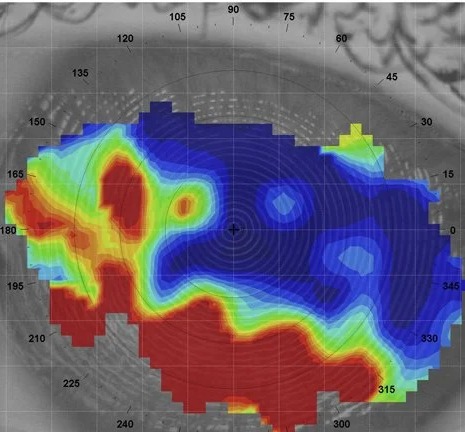
Test 1 · tear stability
How long your tears stay smooth
After you blink, a camera times how long your tears stay smooth before they start to break up. Under 10 seconds suggests they are drying out too fast, which usually points to a problem with the oil glands.
Takes about 30 seconds. No dye, no drops, no contact.
Test 2 · oil gland photo (meibography)
A photo of the oil glands in your eyelids
An infrared camera photographs the glands inside your eyelid. Working glands look like long, even rows. Blocked or damaged glands look shorter, patchy or missing. The photo shows how far the problem has gone, and lets us compare later visits.
Quick, no contact.
Suitability
Who does IPL suit?
IPL often suits dry eye that comes with rosacea or facial flushing, red eyelid edges, Demodex blepharitis, or contact lenses that have become hard to wear. It does not suit everyone, so we check your glands first.
We don't expect you to diagnose yourself. That's what the Dry Eye Assessment Package is for. It is a bulk-billed consultation, with the two tests from $50. We'll assess your glands and recommend the treatment that suits them.
Dry-eye self-check
Are you a good candidate for IPL?
IPL is a targeted medical therapy, but it isn't for everyone. Answer 4 quick questions to check your suitability. Nothing you answer is stored.
Answer all four questions first.
One of your answers is something we'd check first.
IPL is not suitable for very dark skin types (Fitzpatrick V–VI), people on photosensitising medications (such as certain acne or antibiotic treatments), those who are pregnant, or those with active facial conditions. We assess all of this at the $50 Dry Eye Assessment Package, and talk through the other treatment routes.
Equipment
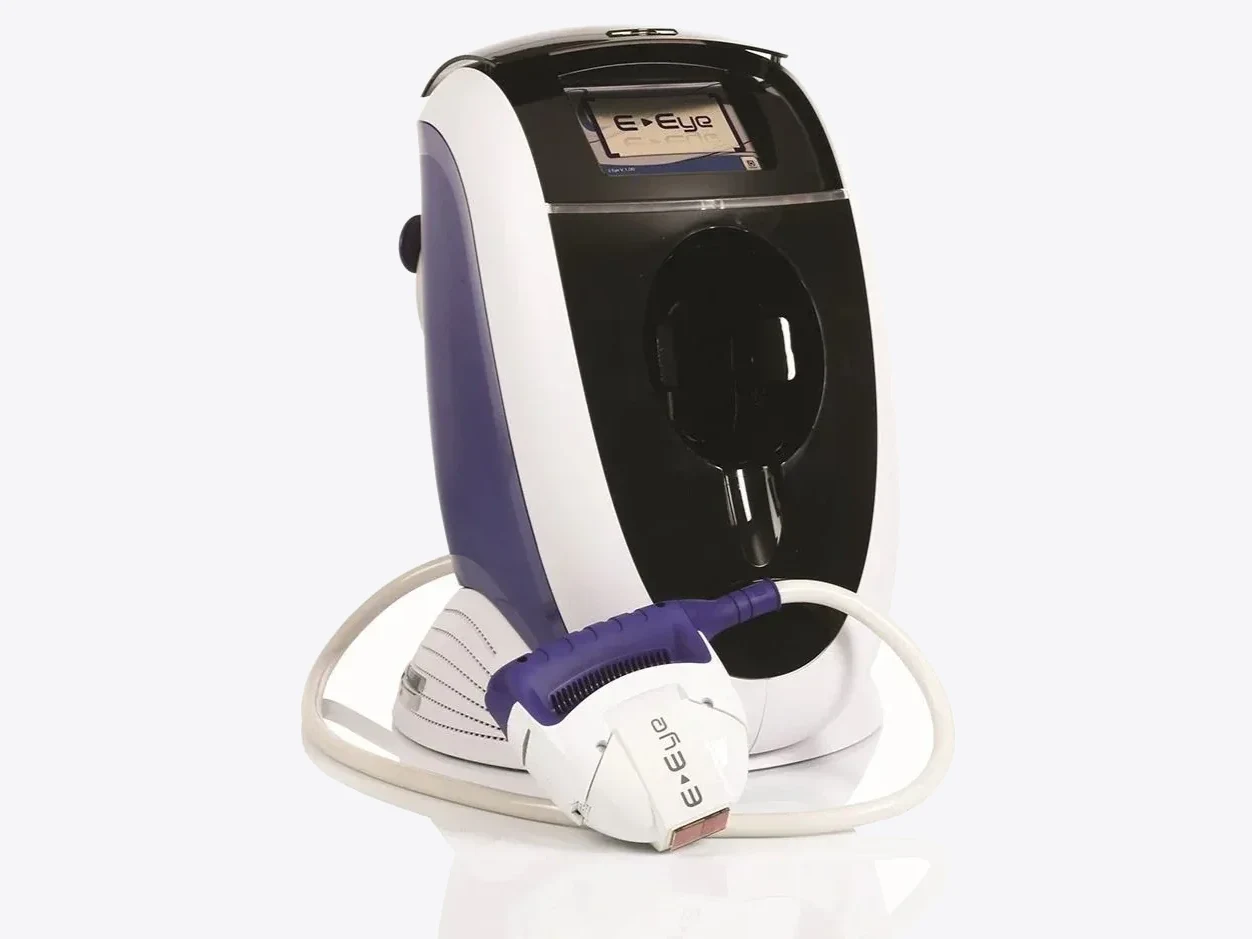
The E-Eye IPL device
- E-EYE
- ESW Vision
- E-Eye is entered in the ARTG (289698)
- CE Marked for MGD
- Used in Craig 2015 RCT
Designed for meibomian gland dysfunction, with the pulse sequence, energy settings and protocol set for the skin around the eyes.
This is the same device used in the Craig 2015 trial, one of the first placebo-controlled trials of IPL for dry eye.
During IPL treatment
What happens during an IPL session?

Step 1 of 4
Sit comfortably
Settle in. Shields, gel and the handpiece are laid out ready.

Step 2 of 4
Eye shields
Protective shields placed.

Step 3 of 4
Cooling gel
Cooling gel goes on below the eyes.
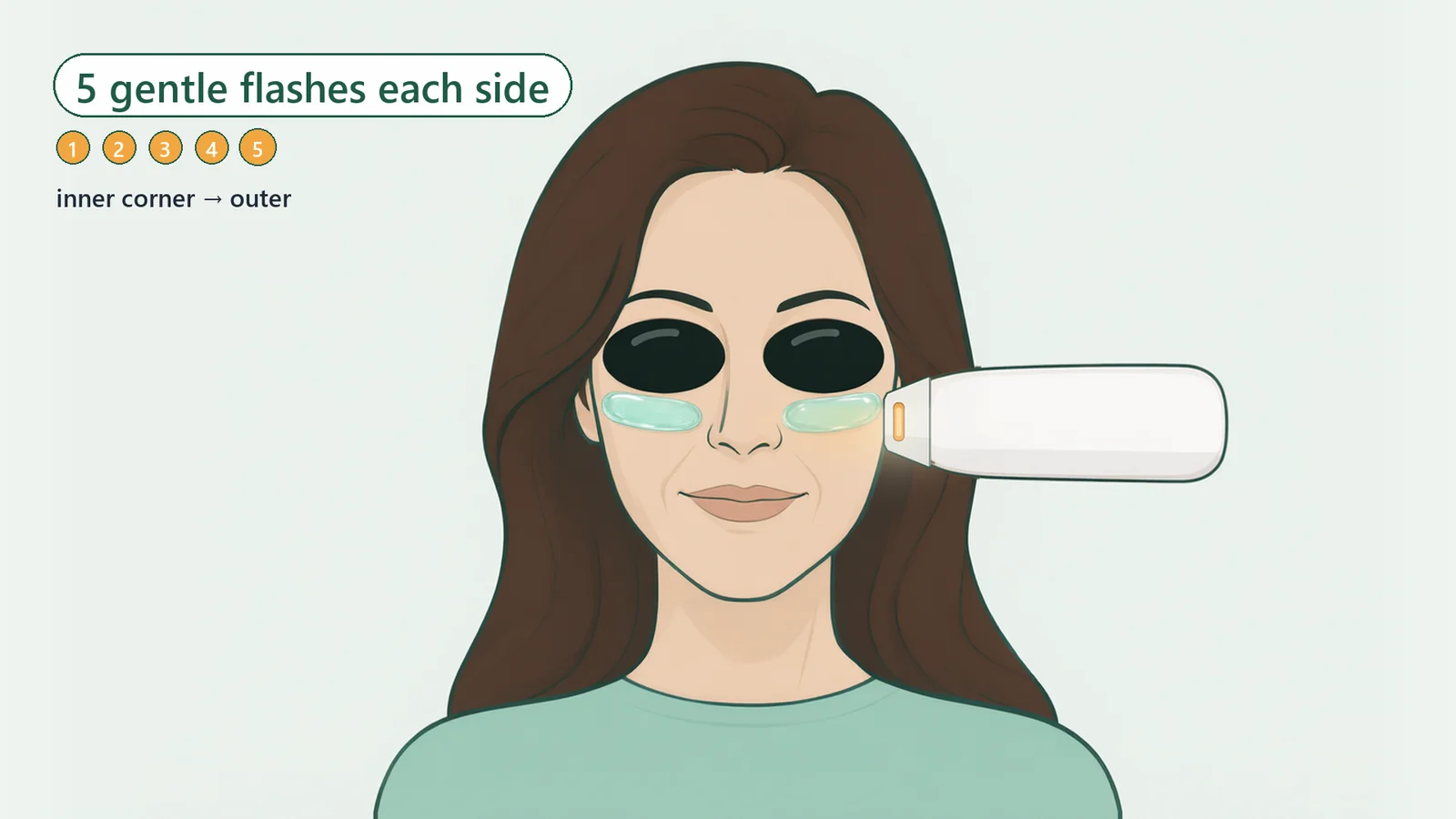
Step 4 of 4
Light pulses
Gentle light, ear to ear. You'll feel a little warmth.
Most people describe a brief warm flash. Most people don't find it painful.
Your skin might look slightly pink for an hour. Most people can drive home, as long as your vision is clear and your eyes are comfortable. The pictures are illustrations, not photos of a patient.
The full IPL course
Four sessions over three months
Day 1
Session 1
First treatment. Sets the baseline.
Day 15
Session 2
Builds on the first. Some notice improvement.
Day 45
Session 3
Many patients notice improvement by this stage.
Day 75
Session 4
Final session. Full results assessed.
The standard E-Eye course is four sessions; the first controlled trial (Craig 2015) used three. Maintenance is typically a top-up about every 6 months, at $200 a session.
Google reviews from dry eye patients
What our patients say
★★★★★
"Mark treated my dry eyes with IPL and I can't thank him enough. After my 3rd session I noticed an improvement, and by the 4th the dryness was almost completely gone. Really happy with the results."
★★★★★
"The care and attention I received was professional yet extremely friendly. I wasn't rushed or pressured during my visit and the Optometrist, Vivian, was excellent in diagnosing my very dry eye problem after my recent cataract surgery, which has compounded my dryness. I can thoroughly recommend her and the whole staff at Concorde Eyecare.."
★★★★★
"I got my eyes tested by Mark and what he explained, no one else has explained to me this way — even though I've had eye tests in Australia for so many years. He genuinely cares about your eyes. I'm never going anywhere else."
Dry eye resources
More about dry eye
- Dry eye treatmentThe full guide, symptoms to treatment plan.
- Meibomian gland dysfunctionThe blocked-gland problem behind most dry eye.
- BlepharitisSore, crusty eyelids and how we treat them.
- Demodex blepharitisEyelash mites, and why they matter.
- Dry eyes at nightWhy eyes feel worse in the evening or on waking.
- Omega-3 for dry eyesWhat the research says about supplements.
- What we testWhat the $50 Dry Eye Assessment Package tests.
- IPL questions answeredCost, sessions, comfort and cover.
Frequently asked questions
Questions about IPL for dry eye
How does IPL treat dry eye?
IPL targets inflammation and abnormal blood vessels around the eyelids, which improves the function of your meibomian glands. This helps restore the oil layer of your tear film, the root cause of most chronic dry eye, particularly evaporative dry eye and meibomian gland dysfunction.
What does IPL cost at Concord Eyecare?
There are three ways in. The full IPL Treatment Pathway is $850. It covers the full Dry Eye Assessment Package, the tear stability test and the oil gland photo, 4 IPL sessions over 3 months, and ongoing reviews. If you'd rather go straight to IPL without the Dry Eye Assessment Package, the four sessions are $800, for IPL only. Before your first session you have a basic eye test, a separate consult, bulk billed for eligible Medicare patients. If you're still working out what's going on with your eyes, the Dry Eye Assessment Package is $50 on top of a bulk-billed Medicare consultation and includes the same diagnostic workup without committing to IPL. It covers NIBUT, meibography and a Schirmer test if needed, and takes at least 20 minutes.
How many IPL sessions do I need?
Most patients need 4 initial sessions spaced 2–4 weeks apart, followed by maintenance sessions about every 6 months, at $200 a session. Results are cumulative: each session builds on the last.
Is IPL for dry eye painful?
Most patients describe it as a warm flash with a brief tapping sensation. Most people don't find it painful. Most people can drive home, as long as your vision is clear and your eyes are comfortable, and most go back to normal activities the same day, following the aftercare advice (including sun protection). Your skin might look slightly pink for an hour.
Is IPL covered by Medicare or private health insurance?
IPL for dry eye is not covered by Medicare. Most private health funds don't rebate it either, though a small number pay a partial rebate under therapy or dry eye benefits. We check your specific fund at the assessment so you know before committing. The initial dry eye consultation is bulk-billed; the $50 Dry Eye Assessment Package and IPL (from $800) are both private fees.
How is IPL different from warm compresses?
Warm compresses soften blocked oil through heat, which helps but has limits. IPL targets the inflammation behind blocked glands. The comparison above shows each option.
Can an optometrist perform IPL?
Yes. Optometrists in Australia can perform IPL for dry eye. All three of ours are also therapeutically endorsed, which means we can prescribe ocular medications directly.

Reviewed by Dr. Mark Joung (Optometrist) B.Optom (Hons) UNSW, Certificate in Ocular Therapeutics (ACO) | Updated October 2026
References (8)
- Craig JP, Chen YH, Turnbull PR. Prospective trial of intense pulsed light for the treatment of meibomian gland dysfunction. Invest Ophthalmol Vis Sci. 2015;56(3):1965-1970.
- Toyos R, McGill W, Briscoe D. Intense pulsed light treatment for dry eye disease due to meibomian gland dysfunction; a 3-year retrospective study. Photomed Laser Surg. 2015;33(1):41-46.
- Liu R, Rong B, Tu P, et al. Analysis of cytokine levels in tears and clinical correlations after intense pulsed light treating meibomian gland dysfunction. Am J Ophthalmol. 2017;183:81-90.
- Arita R, Mizoguchi T, Fukuoka S, Morishige N. Multicenter study of intense pulsed light therapy for patients with refractory meibomian gland dysfunction. Cornea. 2018;37(12):1566-1571.
- Huo Y, Mo Y, Wu Y, Fang F, Jin X. Therapeutic effect of intense pulsed light with optimal pulse technology on meibomian gland dysfunction with and without ocular Demodex infestation. Ann Transl Med. 2021;9(3):238.
- Toyos R, Desai NR, Toyos M, Dell SJ. Intense pulsed light improves signs and symptoms of dry eye disease due to meibomian gland dysfunction: a randomized controlled study. PLOS ONE. 2022;17(6):e0270268.
- Fineide F, Magnø MS, Khan AZ, Chen X, Vehof J, Utheim TP. Intense pulsed light treatment in meibomian gland dysfunction: past, present, and future. Acta Ophthalmol. 2024;102(4):e414-e442.
- Peira N, Ali EM, Modén NK, Fjellgren E, Lennmarken C, Hultcrantz M. Effectiveness and safety of intense pulsed light therapy for dry eye symptoms due to meibomian gland dysfunction: a systematic review and meta-analysis. Acta Ophthalmol. 2025;103(4):371-379.