
The Myopia Clinic · Sydney
MiyoSmart iQ: the glasses that help slow your child's myopia
Also called myopia control glasses.
$750a pair, including 12 months of reviews
- ★ 4.9 from 200+ Google reviews
- Advanced qualifications in children's vision All of our optometrists hold advanced qualifications in children's vision
- 2,500+ children cared for by our optometrists
- 1,000+ ortho-K lenses fitted between our optometrists
What it is
What is MiyoSmart iQ?
HOYA's newest myopia control lens, generally available in Australia since August 2026.
Spectacle lens
Worn like ordinary glasses. Nothing touches the eye.
DIMS design
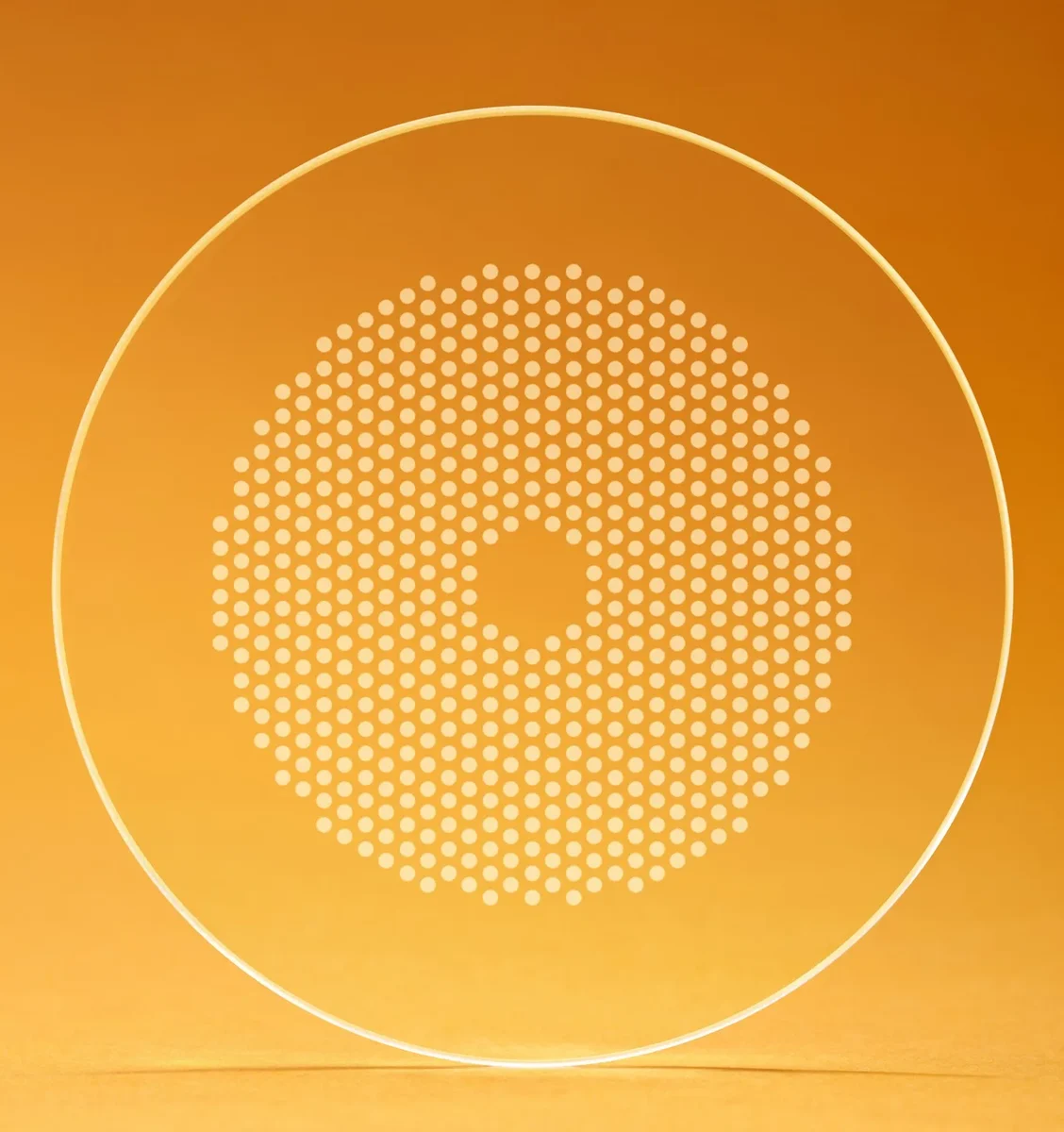
Hundreds of tiny lenslets in a honeycomb around a clear centre (HOYA).
From age 4
For children whose short-sightedness keeps getting worse.
Tough lens
Impact-resistant, with UV protection built in. Looks like any other lens.
How MiyoSmart iQ works
How does it work?
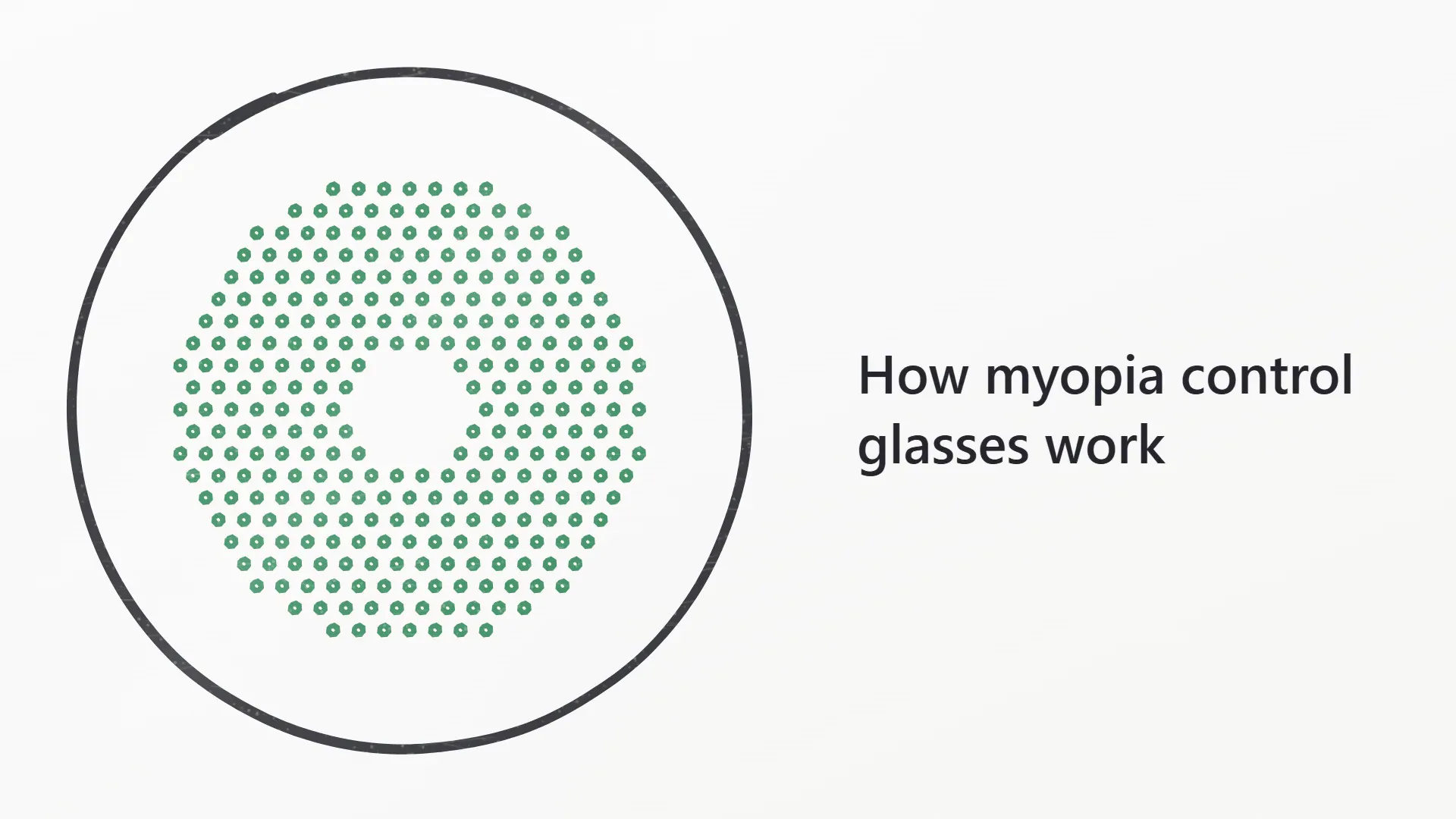
Hundreds of tiny segments around a clear centre signal the eye to grow more slowly.
- Clear centre
- Your child sees sharply through it, like ordinary glasses.
- Honeycomb of segments
- Short-sightedness means the eye is growing too long. The segments focus some light in front of the retina, signalling slower growth (Read et al., 2010).
- What iQ changes
- A smaller clear centre and a larger treatment zone than the original MiyoSmart. HOYA calls this DIMS Triple Enhanced Design.
The lenses work only while worn, so all-day wear matters.
iQ vs the original
What is different about MiyoSmart iQ?
The same DIMS design, with the segments brought closer to the centre and spread wider.
Specifications from HOYA product information. HOYA calls the iQ design DIMS Triple Enhanced.
The evidence
Does MiyoSmart iQ work?
Six years of published results for the original design, and one year of HOYA data for iQ.
Two-year randomised trial, Hong Kong, 183 children aged 8 to 13, original DIMS design
0.21 mm of axial length progression
Eyes grew less than half as much as with ordinary glasses.
Children in ordinary single-vision lenses grew 0.55 mm over the same two years. All wore their glasses through the day.
Lam et al. 2020, British Journal of Ophthalmology
21.5%
Prescription did not get worse over two years
Against 7.4% of children in ordinary lenses, in the same trial (Lam et al., 2020).
6 years
Longest follow-up
Slowing held over six years of wear, with no faster worsening after stopping (Lam et al., 2023, Scientific Reports).
1 year
MiyoSmart iQ, HOYA data
Presented at ARVO 2026, not yet peer-reviewed. Designed to work at least as well as the original; the results so far are interim (Tse et al., 2026).
Why we read the iQ results carefully
- Twelve-month interim data from one ongoing trial of 196 children in Hong Kong.
- Presented at a conference (ARVO 2026), not yet peer-reviewed or published in a journal.
- Funded by HOYA, the manufacturer.
- Reported so far only as a conference abstract. No peer-reviewed paper compares iQ with the original MiyoSmart.
- No long-term or after-stopping data yet.
No peer-reviewed trial compares iQ directly with the original MiyoSmart, Stellest 2.0 or ZEISS MyoActive. Fit and hours worn decide the result. MiyoSmart iQ vs Stellest 2.0 vs ZEISS MyoActive: compare the three
Who it suits
Is MiyoSmart iQ right for my child?
Most short-sighted children from about age 4. Some do better with another option.
Eyes getting worse at each check-up, from about age 4
MiyoSmart iQ suits
Glasses are the simplest start. Nothing goes in the eye, and the lenses look like ordinary glasses.
Not ready for contact lenses or eye drops
The simplest option
No lens hygiene, no insertion, nothing to put in the eye at night.
Glasses come off for sport most days
Ortho-K may suit better
Treatment happens only while the glasses are on. Overnight lenses leave the day free.
Eyes still changing faster than we would like at a review
We discuss adding to the plan
Glasses alone may not be enough. Ortho-K, or a second treatment alongside the glasses, comes into the conversation.
In our practice
We fit MiyoSmart iQ, Stellest 2.0 and ZEISS MyoActive. Which lens, or which treatment, is decided with you at the Children's Myopia Assessment, after we measure your child's eyes.

Fitting
Why does the fit matter so much?
The pupil must stay inside the 6.9 mm clear centre. A slipping frame moves it out.
- Assess. Children's Myopia Assessment: prescription, how fast the eyes are changing, and axial length.
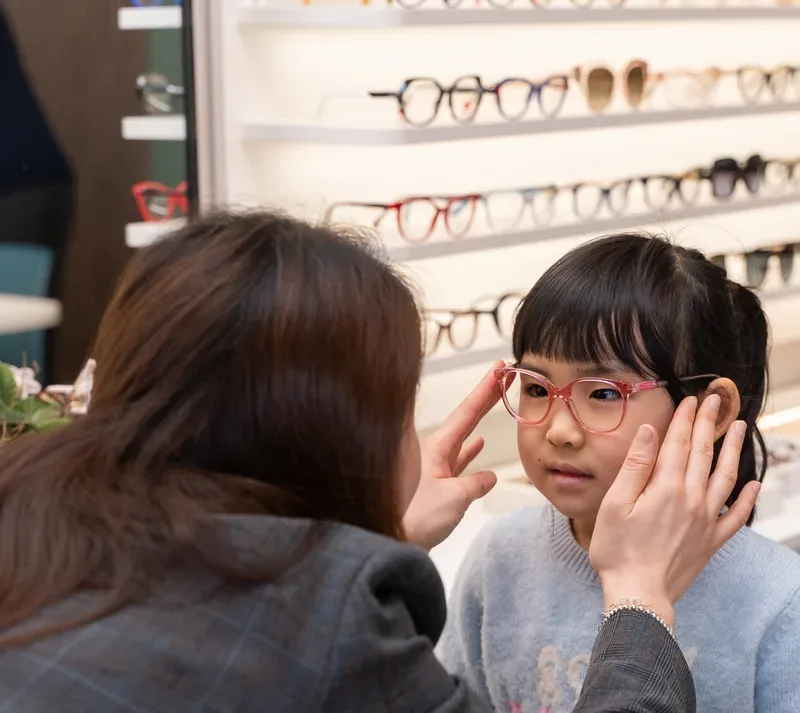
- Choose a secure frame. Not every children's frame holds the lens centres in place. We stock Tomato Glasses and children's brands that do.
- Measure digitally. Pupil centres measured in the chosen frame, with the head held naturally. A few millimetres out and the segments sit in the wrong place.
- Check before collection. Finished lenses are checked against those measurements before your child wears them.
- Re-check as they grow. Faces change and frames move, so we check the fit at every review. If the glasses slip or sit crooked, bring them in: an adjustment takes a few minutes.
Wear time
How many hours a day do the glasses need to be on?
At least 12 hours a day, every day. The lenses work only while they are on.
Breakfast
Glasses go on
School
Stay on all day
Sport and home
Keep them on in a secure frame
Bedtime
Glasses come off
Same pair, every day. At least 12 hours.

In the practice
"If the glasses are sliding down the kid's nose, twisted, not worn the proper hours, the effectiveness drops."
What works
- On before breakfast, off at bedtime. The rule most of our families follow.
- The same treatment glasses every day, weekends included. No switching to an old pair.
- A comfortable, well-fitted frame. Glasses that slip, pinch or fog up get taken off.
- A spare pair at each house when a child lives between two homes.
What doesn't
- Glasses for reading or screens only. Part-time wear means part-time effect.
- Taking them off for sport or outdoor play for hours each day.
- A frame your child dislikes. Self-conscious children leave their glasses in the bag.
- Glasses that keep slipping and are not brought in for adjustment.
Which lens
Which lens suits my child?
You are not buying a pair of lenses.
You are buying our expertise, our care, our knowledge and 12 months of reviews. That matters more than which lens is in the frame.
We fit MiyoSmart iQ, Stellest 2.0 and ZEISS MyoActive, and choose with you at the assessment. Each slowed axial length progression in its maker's trial; none has been compared directly with the others.
iQ's clear centre is 6.9 mm across (HOYA), so we measure your child's pupils in the chosen frame and adjust it at every visit.
Why fit it here
Why fit MiyoSmart iQ with us?
Ordering the lens is the easy part. The measuring and checking around it decide the result.
Measured in the frame your child will wear
Pupil centres taken digitally with the frame on and the head held naturally, never read off a chart.
Checked before collection
Each pair is checked against those measurements, then the fit is re-checked at every review.
Axial length measured in millimetres
Axial length on our ZEISS IOLMaster 500 when you choose the $45 scan at a review.
What the price covers
What does the $750 include?
The price covers the lenses and a year of care.
MiyoSmart iQ lenses
HOYA Spark coating, with a 12-month scratch warranty.
Measured and checked
Pupils measured digitally. Lenses checked at collection.
12 months of reviews
Four visits in year one, then every six months. Schedule below.
Remake if the prescription changes
By 0.50 D or more within 12 months: one remake at no charge.
- Children's frames
- From $150 · Tomato $210
- Axial length scan
- $45, if chosen
- Myopia Assessment to start
- $95 out of pocket
- Reviews after 12 months
- Standard consultation fee
Charged separately. Many extras policies cover children's glasses; we claim through HICAPS on the day.
Warranties
What if the lenses scratch or the prescription changes?
Within the first 12 months, the warranties cover one replacement pair.
12 months
Scratch warranty
The HOYA Spark coating is covered against scratches.
0.50 D
Prescription change
A change of 0.50 D or more within 12 months means a free remake.
One
Replacement in 12 months
One replacement pair, under whichever warranty applies first.
After that, new lenses are charged at the full price.
If your child cannot adapt within the first 30 days, HOYA's non-adaptation warranty swaps the lenses for ordinary single-vision lenses: a replacement rather than a refund.
Reviews
When will we see my child?
After the $95 assessment, four visits in year one are included. Then reviews every six months.
Start
Optometrist
Children's Myopia Assessment: prescription with cycloplegic drops, axial length, and whether iQ suits. $95.
1 month
Fitting appointment
Collection. Fit and lens centres checked against your child's pupils; home checks explained.
3 months
Optometrist review examination
Vision checked in the new lenses, and the frame adjusted.
6 months
Optometrist review examination
Prescription checked; axial length first compared with the starting measurement.
12 months
Optometrist review examination
Same checks, then every six months. The plan changes as your child's eyes do.
With the dispenserWith an optometrist
Our ZEISS IOLMaster 500 measures axial length: eye length in millimetres. That measurement, rather than the prescription, tells us whether the lenses are slowing axial length progression (IMI guidelines, Wolffsohn et al., 2019). How axial length works
Not sure MiyoSmart iQ suits your child? The assessment tells you.
Frequently asked questions
MiyoSmart iQ questions
What parents ask before booking.
What's the difference between MiyoSmart and MiyoSmart iQ?
Both use HOYA's DIMS design. The newer iQ has a smaller clear centre and a larger treatment zone, placing the signal more precisely.
When can my child get MiyoSmart iQ?
Now. It has been generally available in Australia since 1 August 2026.
Is MiyoSmart iQ proven to work?
Its underlying DIMS design has peer-reviewed evidence. In a two-year trial, all-day wearers had slower prescription change and less axial length progression than children in ordinary lenses (Lam et al., 2020). Follow-up found the slowing held for six years. iQ itself has one year of HOYA data, not yet published.
What age can my child start?
From around age 4. MiyoSmart suits younger children not ready for contact lenses.
Do they look different from normal glasses?
No. MiyoSmart iQ and Stellest 2.0 lenses look and feel like regular glasses.
How long does it take to get used to them?
Most children settle in within a week or two.
Why does fitting matter so much?
The treatment segments must sit around your child's pupils, not over them. iQ's smaller clear centre leaves less room for error.
Can my child play sport in them?
Yes, in a secure frame. Treatment pauses while the glasses are off, so if your child's sport means hours without glasses most days, ortho-K may suit better.
What frames do you recommend for myopia control lenses?
Not every children's frame is suitable. It must hold the lenses in position all day. We stock Tomato Glasses and several children's brands that do.
Is there a version that darkens in the sun?
Yes. MiyoSmart iQ Chameleon lenses darken outdoors and clear again indoors. We charge no extra for the light-reactive version.
What if my child's prescription changes?
A change of 0.50 D or more within 12 months qualifies for one remake at no charge.
Does private health cover MiyoSmart iQ?
Many extras policies include children's glasses under the optical allowance, and cover varies by fund and level. We claim through HICAPS on the day.
Can MiyoSmart be combined with other treatments?
Yes. If your child's eyes keep getting worse on glasses alone, we discuss options including low-dose atropine and its side effects. Low-dose atropine
MiyoSmart or Stellest: which is better?
Both have good clinical trial evidence. We fit MiyoSmart iQ, Stellest 2.0 and ZEISS MyoActive, plus ZEISS MyoCare for strong prescriptions. We choose with you at the assessment. MiyoSmart vs Stellest vs ZEISS, compared
Are MiyoSmart lenses worth it?
In the two-year trial, the original MiyoSmart slowed axial length progression compared with ordinary glasses. The slowing held over six years (Lam et al., 2020 and 2023). Whether it is worth it for your child depends on how fast their eyes are changing. The assessment measures that.
How will we know the lenses are working?
Prescription change does not tell us. We measure eye length every six months and compare it with the normal growth band for your child's age.
Is MiyoSmart safe?
It is a spectacle lens: nothing touches the eye, so there is no infection risk to manage. The fit and the hours worn decide the result.
What happens if we stop?
The lenses work only while worn. After stopping, the eye returns to its natural growth rate for your child's age.
How often are check-ups?
Four visits in year one: a fitting appointment at 1 month, then a review examination with our optometrist at 3, 6 and 12 months. Then every 6 months. The first 12 months of reviews are included.
Further reading
Where to read next.

Three myopia treatments, compared
Glasses, Ortho-K and MiSight side by side, and where atropine drops fit. How we choose between them.
Ortho-K overnight lenses
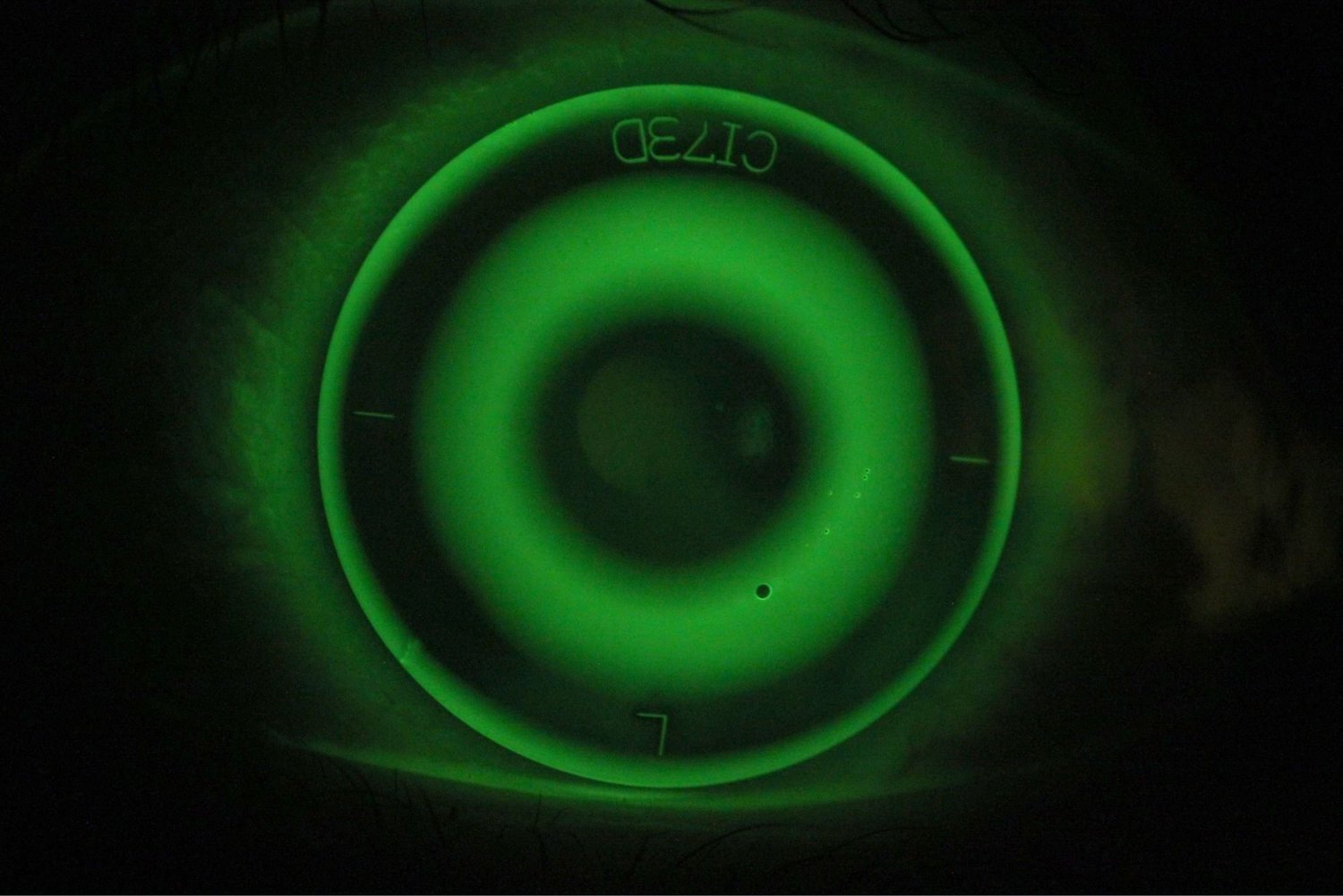
Worn while your child sleeps, for glasses-free days. A strong option for sporty kids.

MiSight daily contact lenses
Daily disposable myopia-control contacts for older children.
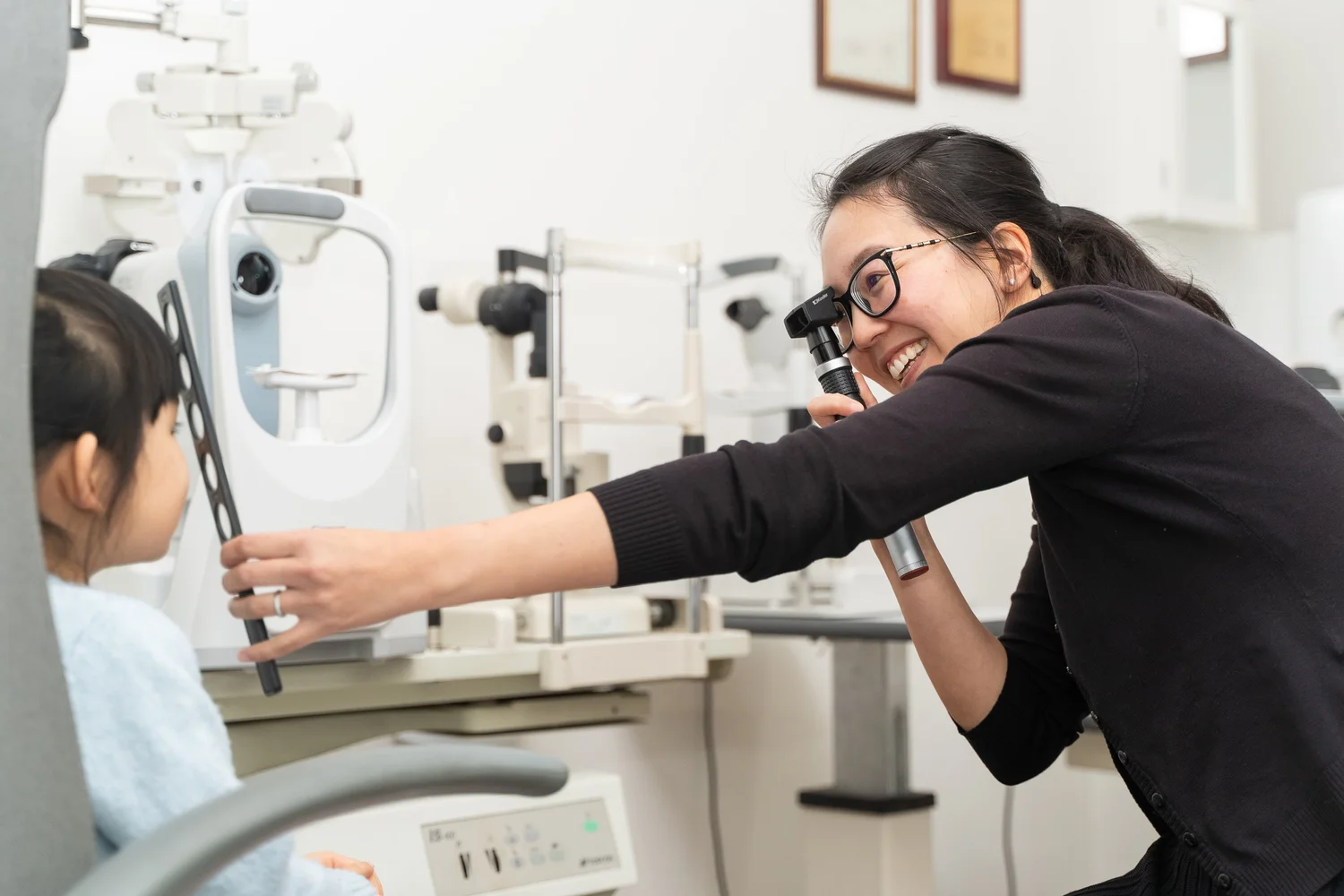
Tracking axial length progression
Why we measure axial length in millimetres to check the treatment is working.
Clinically reviewed by Dr Mark Joung, B.Optom (Hons) UNSW · Certificate in Ocular Therapeutics (ACO) · Advanced Paediatric Eye Care UNSW · Last clinically reviewed: November 2026.
The 2,500+ and 1,000+ figures come from our optometrists' practice records across their careers (October 2026).
References (8)
- Lam CSY, Tang WC, Tse DYY, et al. Defocus Incorporated Multiple Segments (DIMS) spectacle lenses slow myopia progression: a 2-year randomised clinical trial. Br J Ophthalmol. 2020;104(3):363–368.
- Lam CSY, Tang WC, Lee PH, et al. Myopia control effect of defocus incorporated multiple segments (DIMS) spectacle lens in Chinese children: results of a 3-year follow-up study. Br J Ophthalmol. 2022;106(8):1110–1114.
- Lam CSY, Tang WC, Zhang HY, et al. Long-term myopia control effect and safety in children wearing DIMS spectacle lenses for 6 years. Sci Rep. 2023;13(1):5475.
- Bao J, Huang Y, Li X, et al. Spectacle Lenses With Aspherical Lenslets for Myopia Control vs Single-Vision Spectacle Lenses: A Randomized Clinical Trial. JAMA Ophthalmol. 2022;140(5):472–478.
- Tse DYY, et al. MiyoSmart iQ (DIMS Triple Enhanced Design) 12-month RCT. ARVO 2026 Annual Meeting, Abstract 2523. Interim, not yet peer-reviewed; HOYA data on file.
- Read SA, Collins MJ, Sander BP. Human optical axial length and defocus. Invest Ophthalmol Vis Sci. 2010;51(12):6262–6269.
- HOYA Vision Care. MiYOSMART product specifications (6.9 mm clear centre; Spark coating). Manufacturer product information, accessed August 2026.
- Wolffsohn JS, et al. IMI: Clinical Management Guidelines Report. Invest Ophthalmol Vis Sci. 2019;60(3):M184–M203.
Find out if MiyoSmart iQ suits your child
Book a Children's Myopia Assessment. We measure your child's eyes and recommend what suits them.